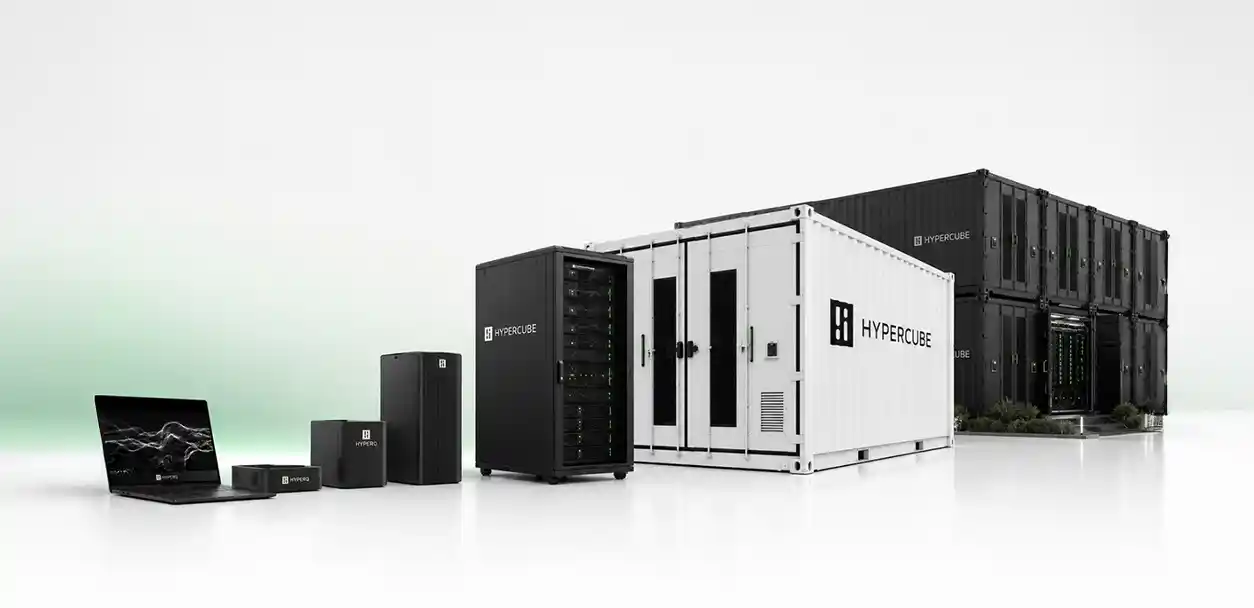
| FamilyHYPERQ Nano Ultra |
Reference EnvelopeDevice class |
Best FitLocal, mobile and disconnected AI |
| FamilyHYPERQ Nano |
Reference Envelope2 to 8 accelerators, 5 to 18 kW |
Best FitVision, robotics, secure RAG |
| FamilyHYPERQ Micro |
Reference Envelope8 to 16 accelerators, 20 to 60 kW |
Best FitPrivate inference and fine tuning |
| FamilyHYPERQ Compact |
Reference EnvelopeUp to 72 accelerators, 0.12 to 0.5 MW |
Best FitRegional and industrial infrastructure |
| FamilyHYPERCUBE Nano and Core |
Reference EnvelopeSub 1 MW; 280 to 350 kW |
Best FitEnterprise and regulated private AI |
| FamilyHYPERCUBE Prime |
Reference EnvelopeAbout 400 kW class |
Best FitProduction AI and institutional services |
| FamilyHYPERCUBE Sovereign |
Reference EnvelopeAbout 216 devices, 420 to 480 kW |
Best FitGovernment and national platforms |
| FamilyHYPERCUBE SuperPod and Titan |
Reference Envelope1.8 MW to 20 MW+ |
Best FitSupercomputer to campus scale AI |