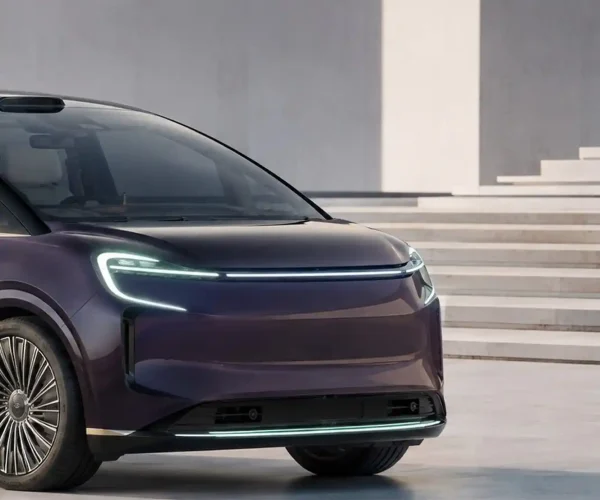
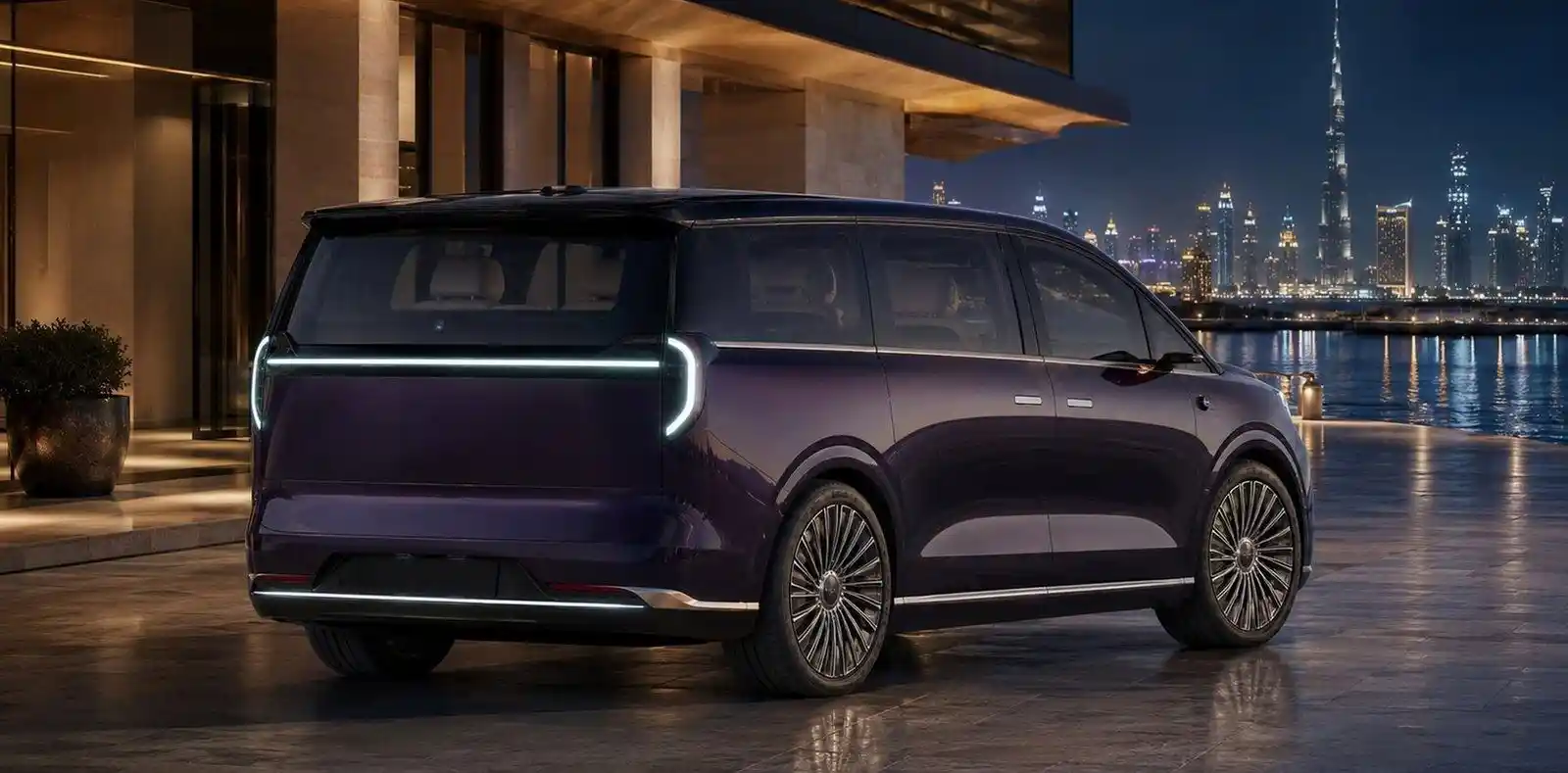
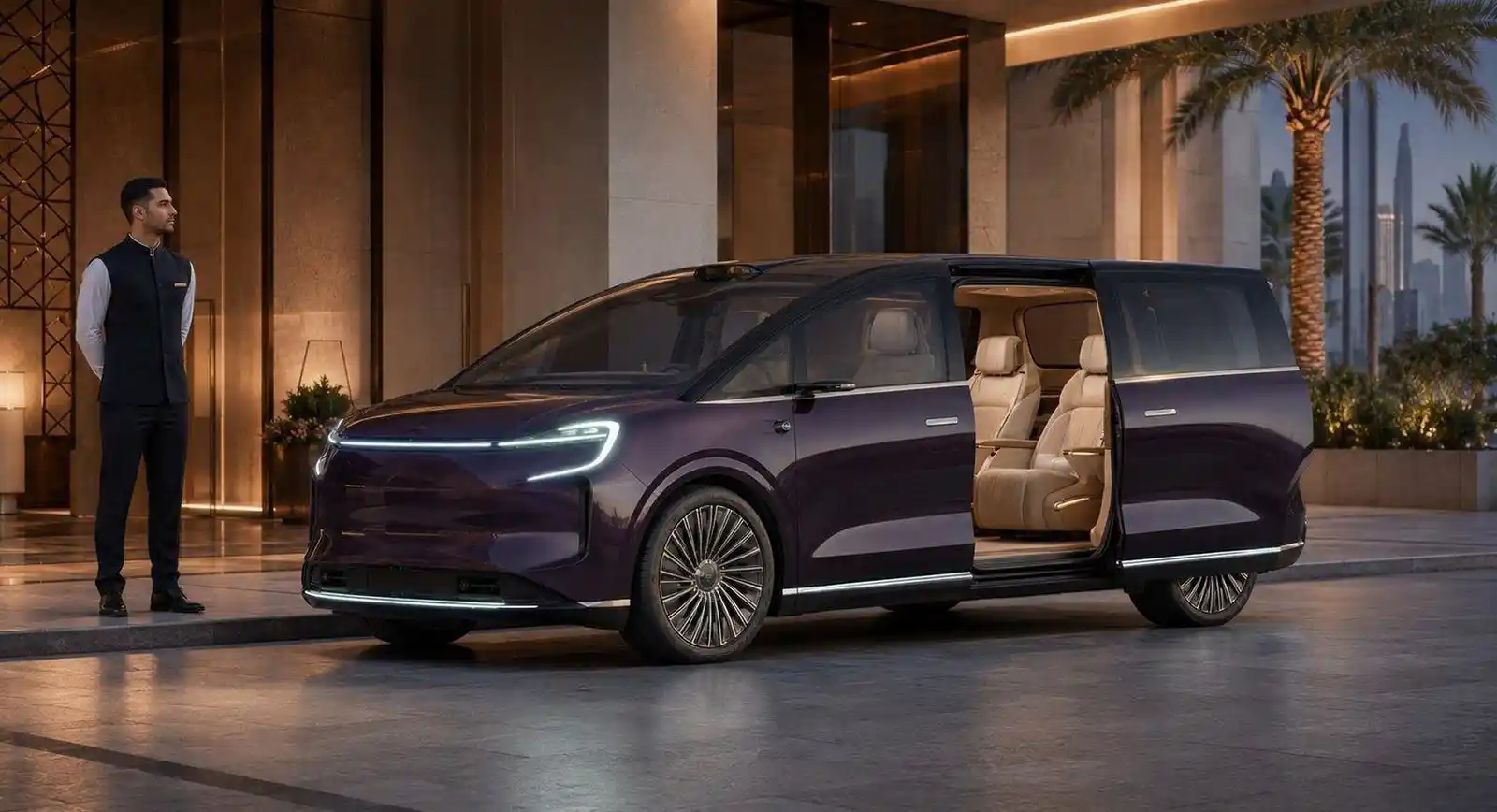
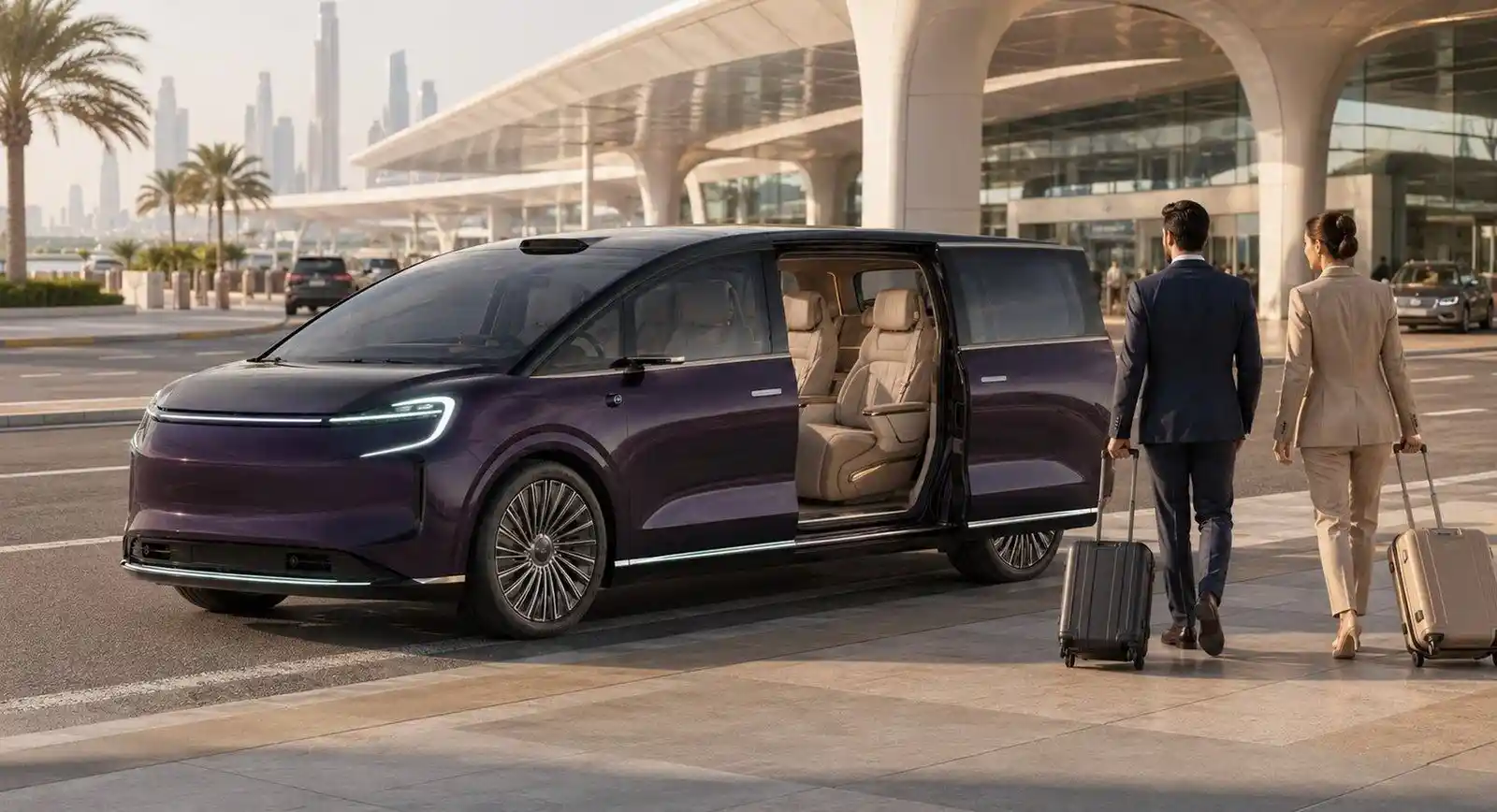
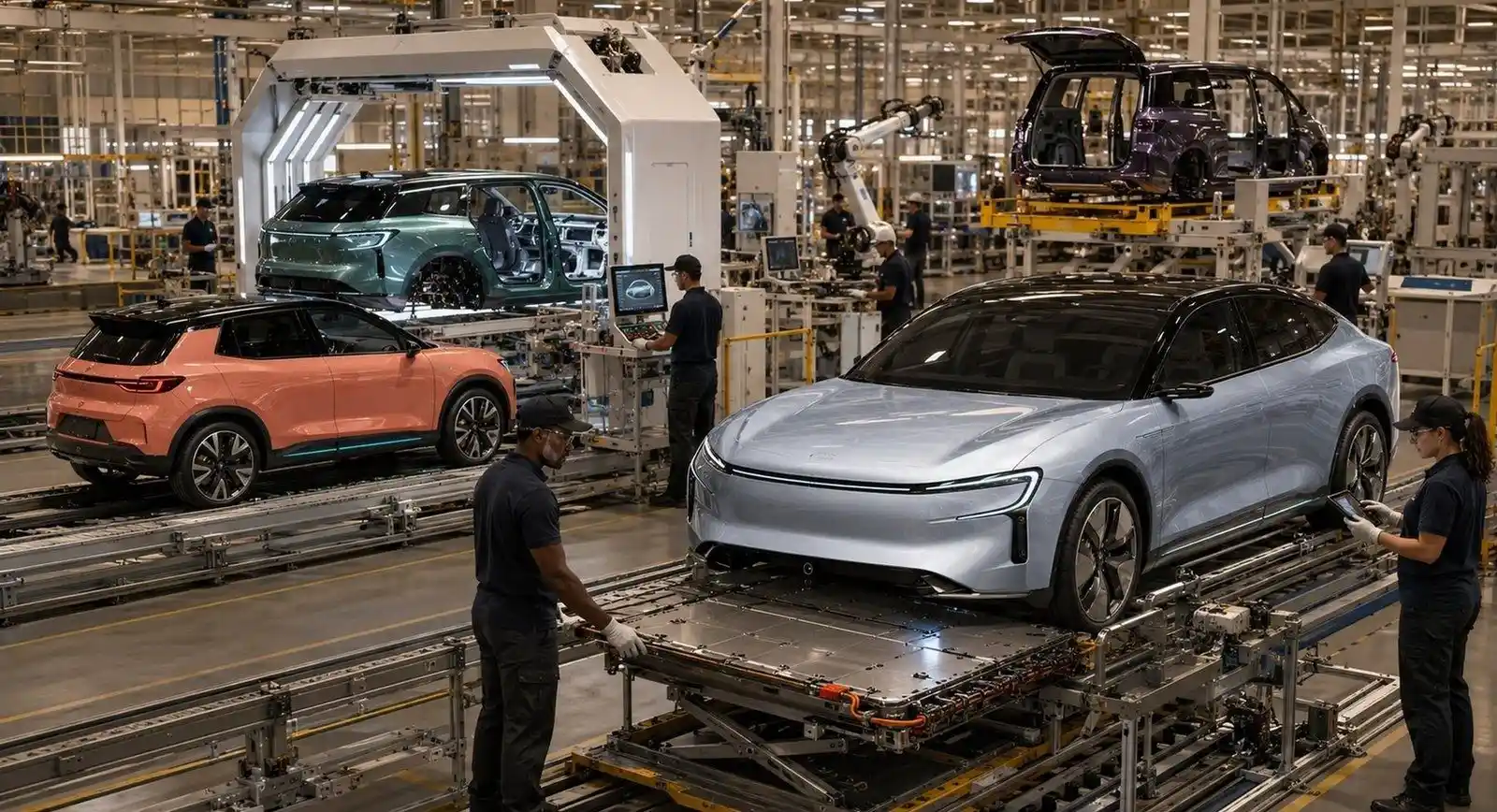
Intelligence, given form.

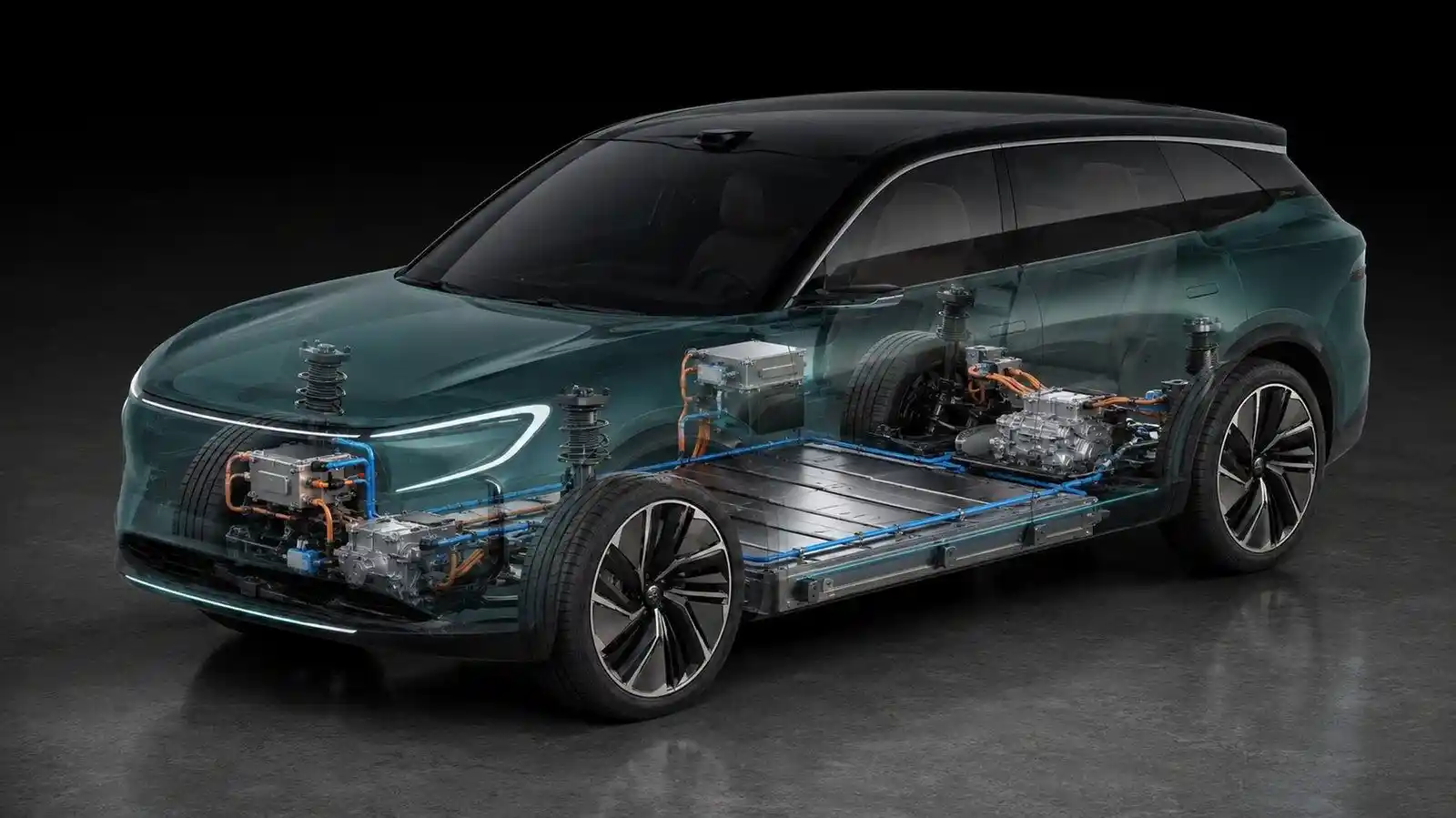
Four original production intent vehicles for Dubai and the United States, designed as one sovereign mobility platform: HyperQ in the vehicle, HYPERCUBE at the depot and campus, one DXQ operating system across both countries.

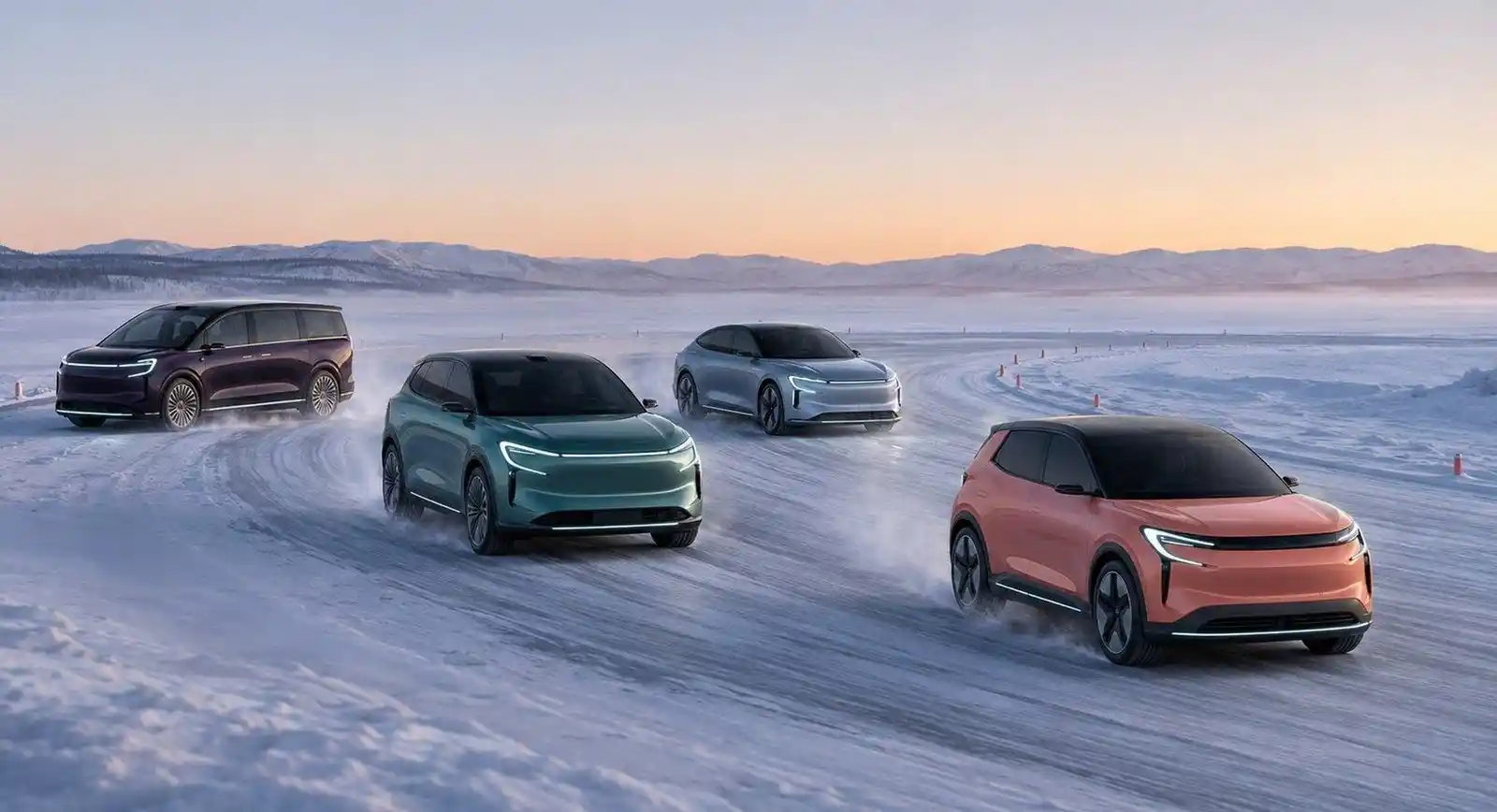
H1 NUR, H2 RIHLA, H3 AERON, H4 MAJLIS. Working model names, subject to trademark and linguistic clearance. Product vision 2028 to 2029.

Not another EV. A sovereign mobility platform.

Designed around the vehicle, the fleet, the city and the factory as one operating system on the HyperQ platform.

Two realities, one family

Consumer vehicles launch with supervised driving assistance. Geofenced fleet autonomy scales only inside an approved operating domain.

One backbone, different physics

One HyperQ platform connects vehicles, depots, charging and remote assistance, while Dubai and U.S. production keep region specific software, data and supply chains.

Sovereign by control

UAE data stays in the UAE and U.S. data stays in the U.S. by default. Signing keys, configuration release and safety evidence remain under programme control.

One backbone. Four vehicles. Two countries.

HyperQ compute travels with the vehicle; HYPERCUBE anchors the depot, the campus and the national estate; one DXQ operating system governs every layer.

Layer Domain Scope
Layer05 DomainFleet and city ScopeFleet OS, geofence and operating domain, depot, dispatch and incident state, operational digital twin, customer APIs.
Layer04 DomainCabin and companion ScopeHyperQ Companion, on device first, Arabic and English from the start, consent based personalisation, cabin modes unlocked only by an approved operating state.
Layer03 DomainCommunications and release ScopeMulti bearer connectivity, V2X context without dependency, signed A/B OTA with rollback, zero trust service boundaries, regional data residency.
Layer02 DomainPerception and mission ScopeQ-Sense cameras, imaging radar, lidar and localisation; route, charging and mission planning; bounded autonomy inside the validated domain.
Layer01 DomainVehicle safety ScopeIndependent minimum risk controller, reserved safety power, redundant braking, steering and networking. Deterministic control owns the envelope.

SAFETY BOUNDARY
HyperQ Companion and HyperQ mission software request bounded actions; the independent safety controller owns the vehicle envelope and can reject them. No cabin, application or connectivity fault can command steering or braking, or reach the signing roots.

The 2028 customer buys time, not horsepower.

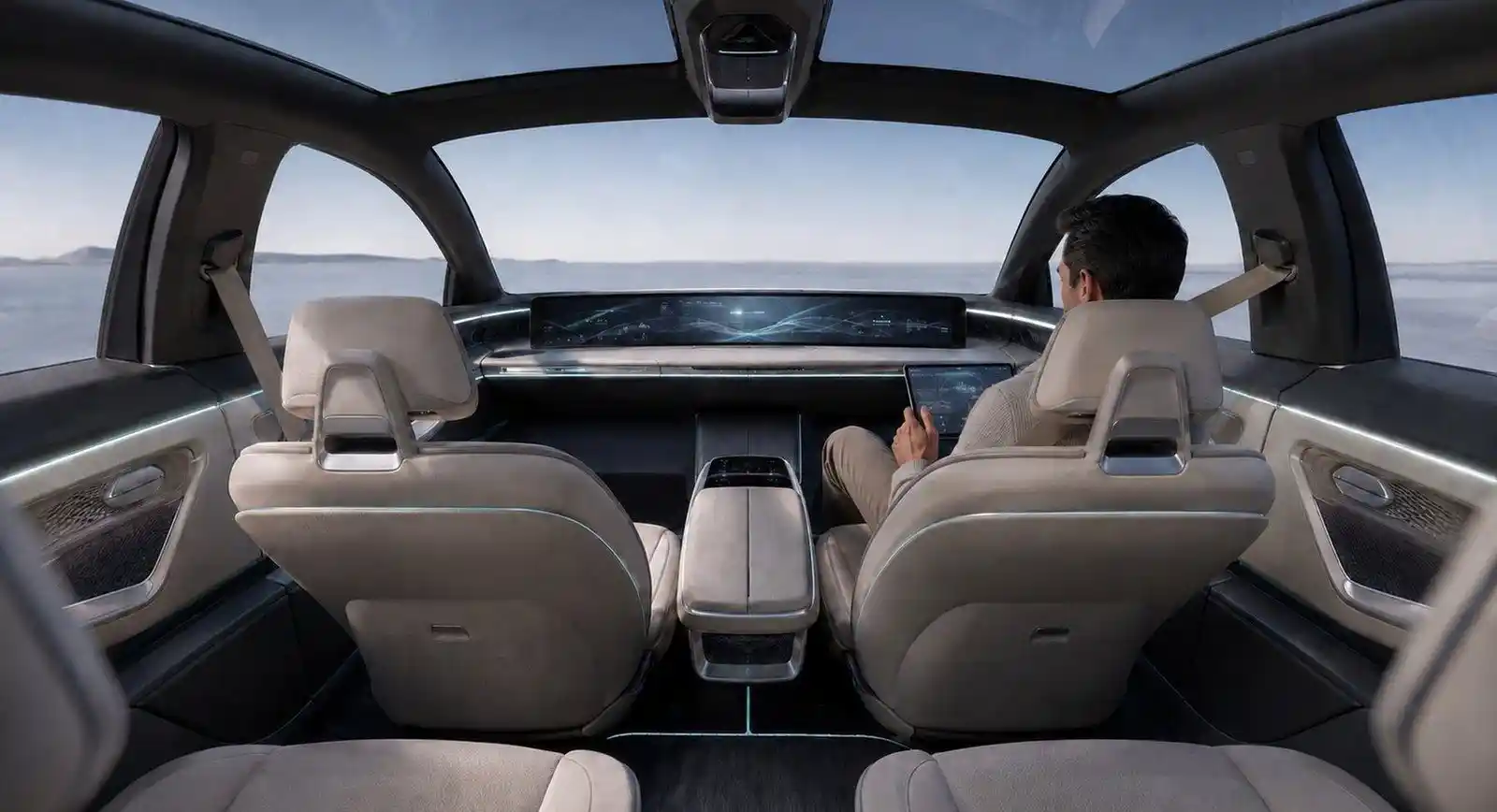
he winning autonomous car will remain a beautiful car, then make every journey useful, calm and safe. Work and lounge modes unlock only when parked or inside an approved automated operating state. The driver never inherits ambiguity.

01

Drive

Clear control state, physical fallbacks and confident visibility.

02

Work

A cabin that becomes productive only when the operating domain permits it.

03

Rest

Thermal comfort, quietness and motion quality before screen count.

04

Host

Space, access and privacy shaped by Gulf hospitality.

Four forms answer four moments of life.

From accessible urban intelligence to an executive autonomous lounge.

H1 NUR, H2 RIHLA, H3 AERON, H4 MAJLIS. Working model names, subject to trademark and linguistic clearance.  Product vision 2028 to 2029.

H1

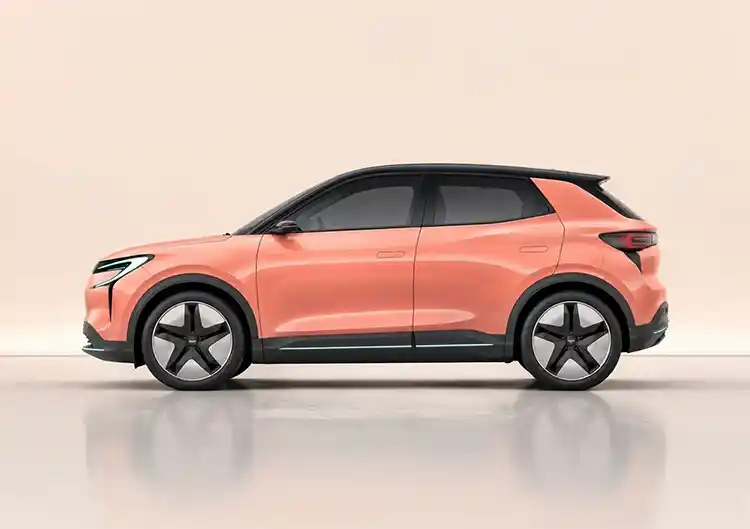
NUR

URBAN EV

55 kWh LFP target, 380 to 410 km WLTP target, 24 min 10 to 80% charge target, 400 V

H2

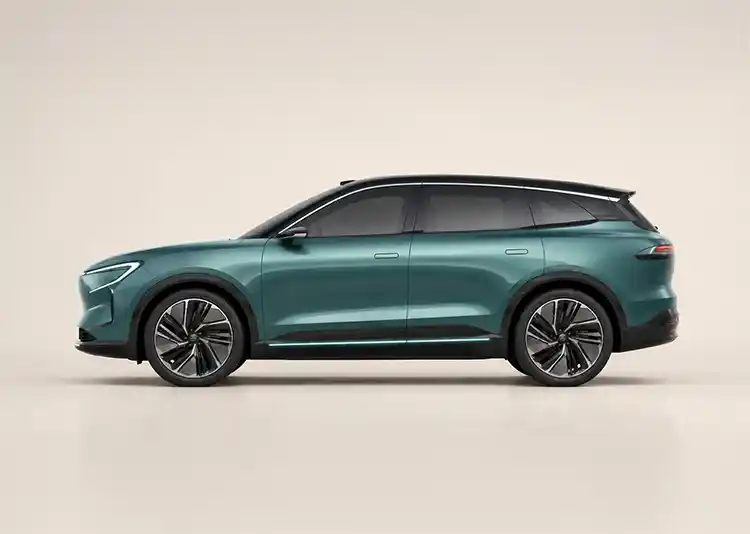
RIHLA

FAMILY CROSSOVER

78 or 92 kWh, 500 or 600 km WLTP target, 15 to 18 min 10 to 80% charge target, 800 V.

H3

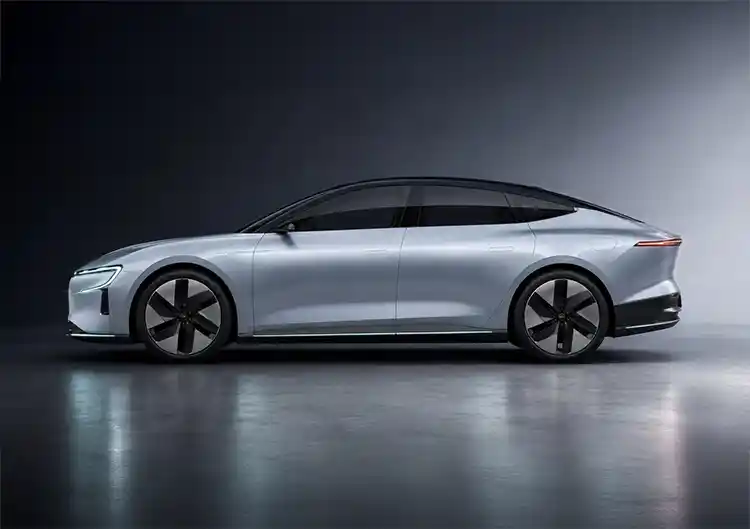
AERON

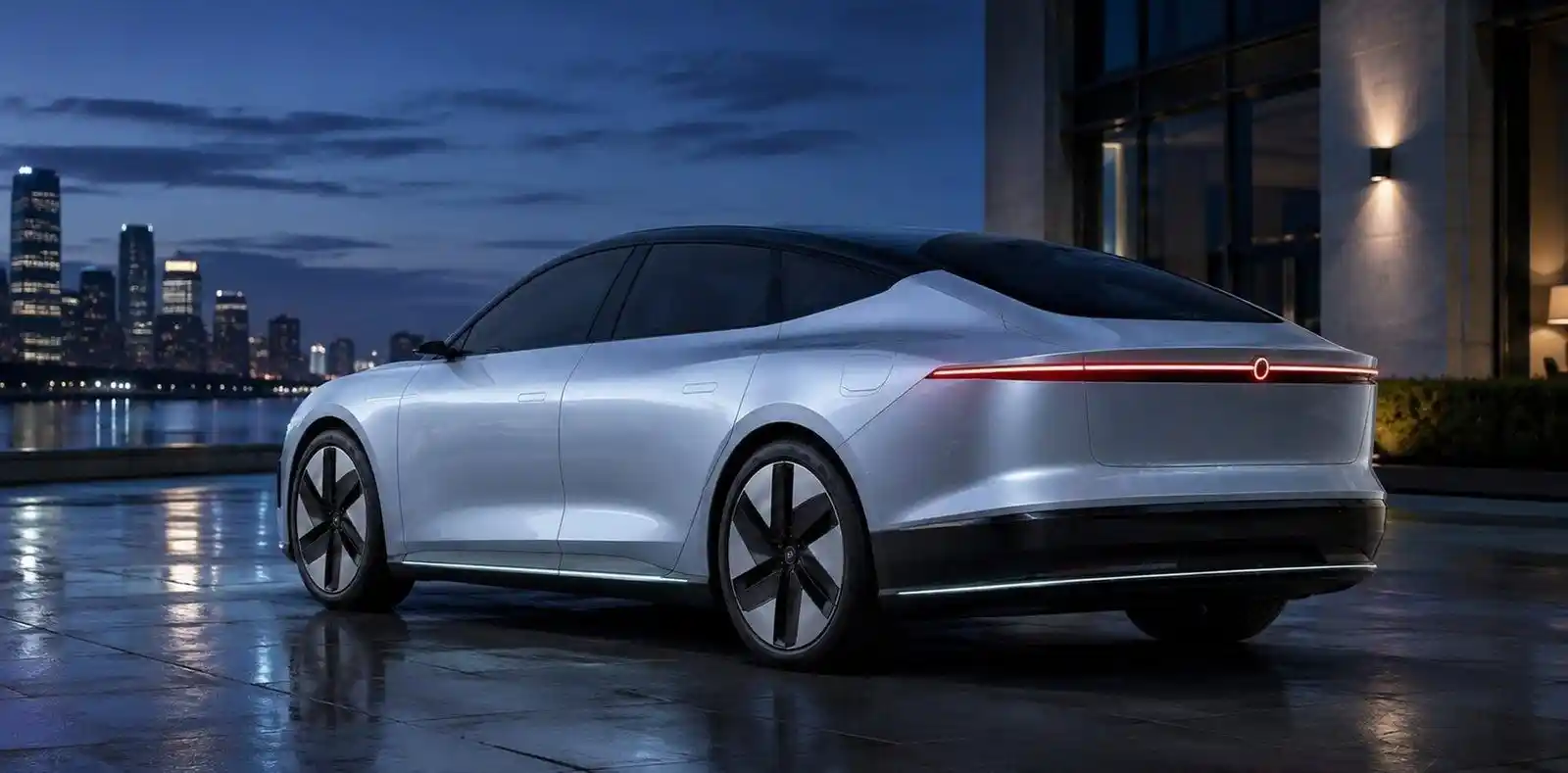
EXECUTIVE FASTBACK

90 or 105 kWh NMC target, 610 or 700 km WLTP target, 13 to 16 min 10 to 80% charge target, 800 V.

H4

MAJLIS

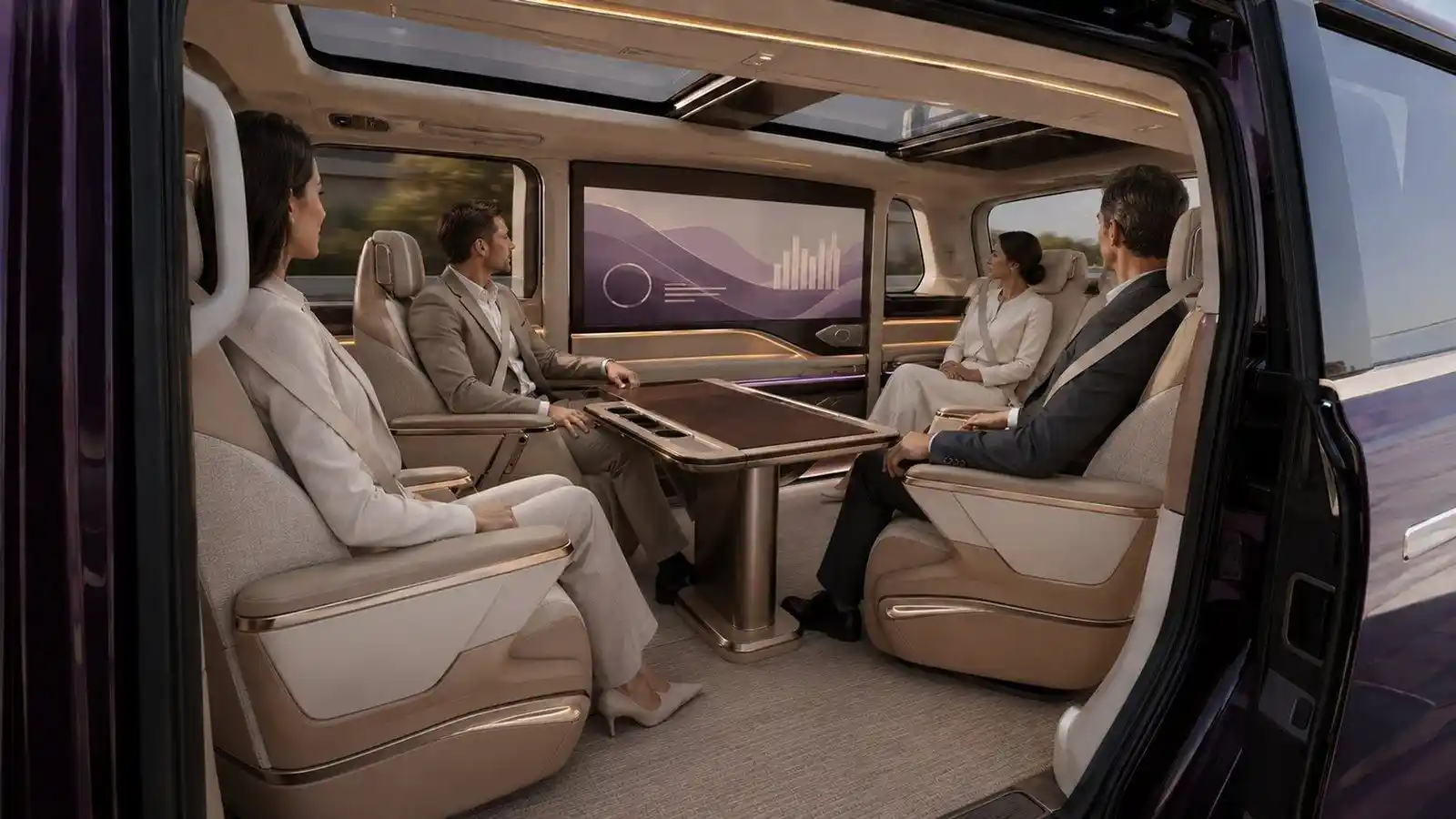
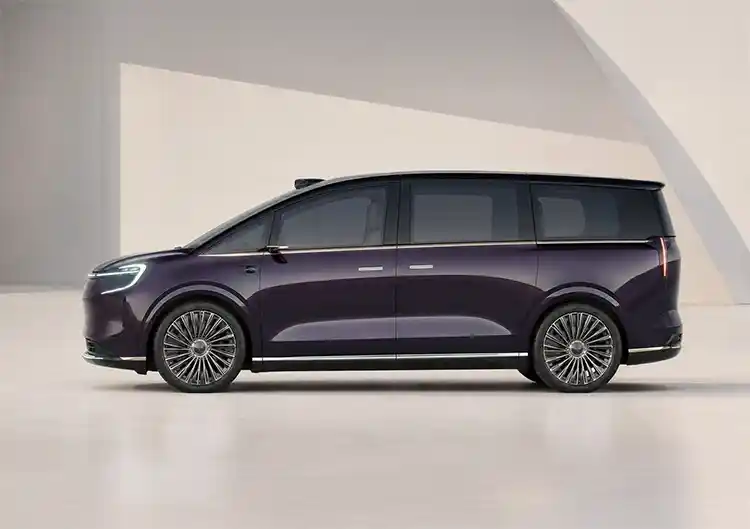
EXECUTIVE LOUNGE MPV

105 or 120 kWh, 540 or 630 km WLTP target, 14 to 17 min 10 to 80% charge target, 800 V.

One family, two voltage classes, one software core.

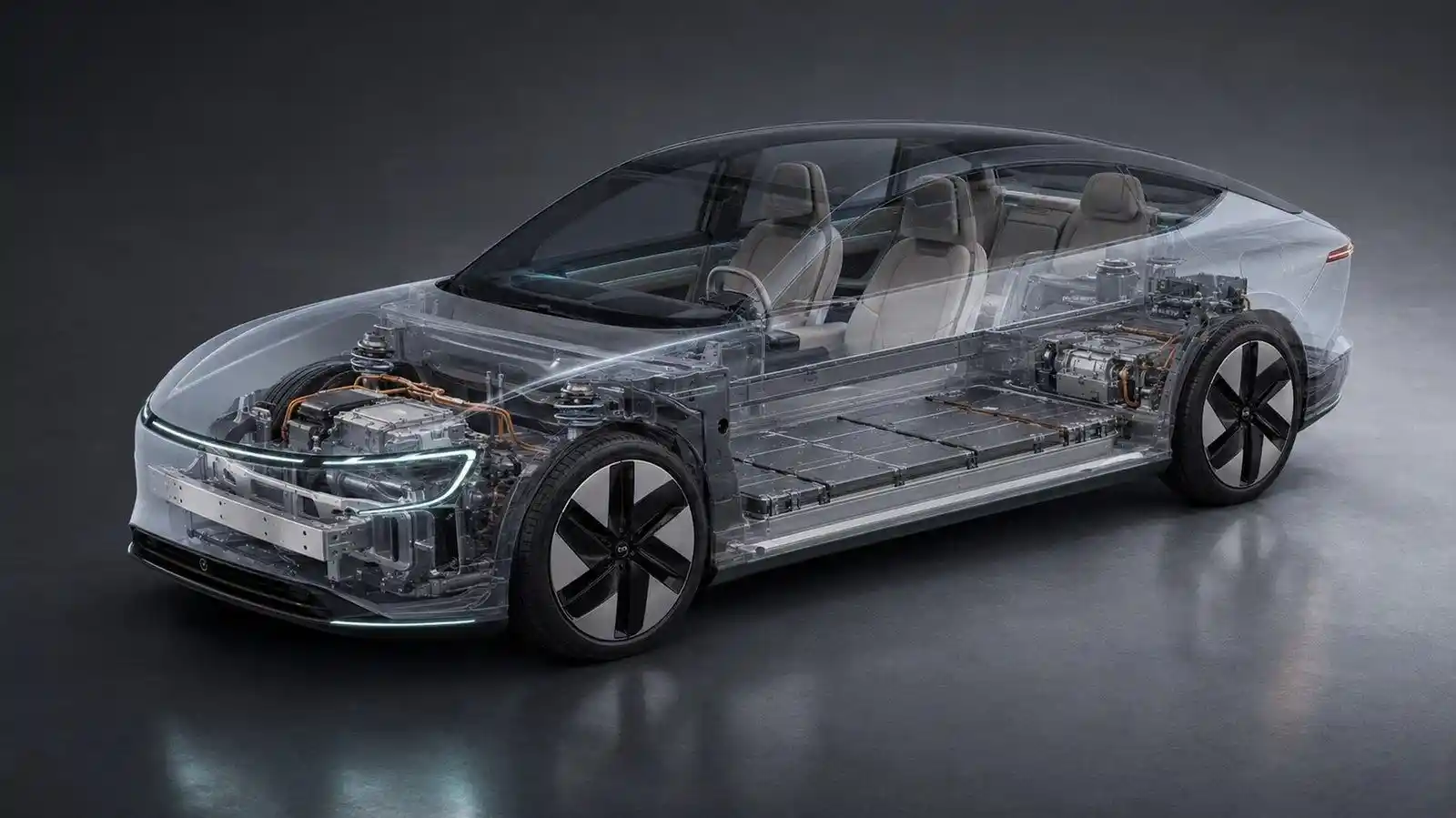
Common modules concentrate investment while each top hat retains its own crash, aero and homologation programme. 400 V keeps NUR cost and mass under control; 800 V silicon carbide serves RIHLA, AERON and MAJLIS and carries the first industrial learning curve.

Model HV Class Battery Target Range Target DC Peak Target Drive Target
ModelH1 NUR HV Class400 V Battery Target55 kWh LFP Range Target380 to 410 km WLTP DC Peak Target160 kW Drive Target150 kW rear drive, 0 to 100 km/h in 7.5 s
ModelH2 RIHLA HV Class800 V Battery Target78 or 92 kWh Range Target500 or 600 km WLTP DC Peak Target320 to 400 kW Drive Target210 kW rear drive or 390 kW all wheel drive
ModelH3 AERON HV Class800 V Battery Target90 or 105 kWh Range Target610 or 700 km WLTP DC Peak Target420 to 480 kW Drive Target250 kW rear drive or 500 kW all wheel drive, 0 to 100 km/h in 3.3 s
ModelH4 MAJLIS HV Class800 V Battery Target105 or 120 kWh Range Target540 or 630 km WLTP DC Peak Target450 to 520 kW Drive Target420 kW dual motor all wheel drive with rear steering

Indicative positions are planning assumptions, not prices, and are not published here. One HyperQ software core, two voltage classes and shared module families carry the whole family; each top hat keeps its own crash, aero and homologation programme.

> 0 %

Software shared across the
family on the HyperQ core

~ 0 %

E/E and powertrain module
families shared

55to 55 %

Parts shared by count

One Q-Arc makes every HyperQ unmistakable.

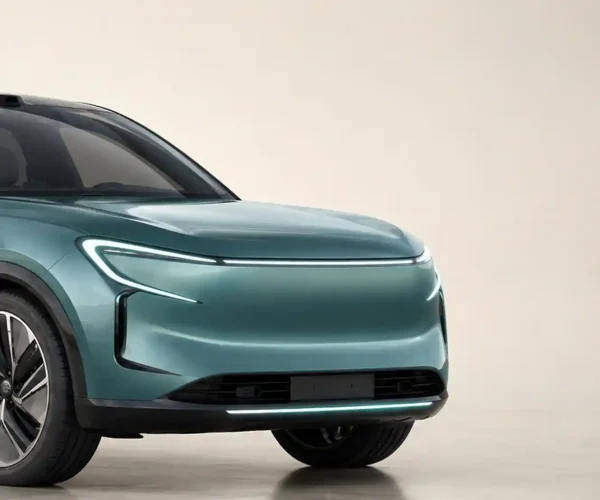
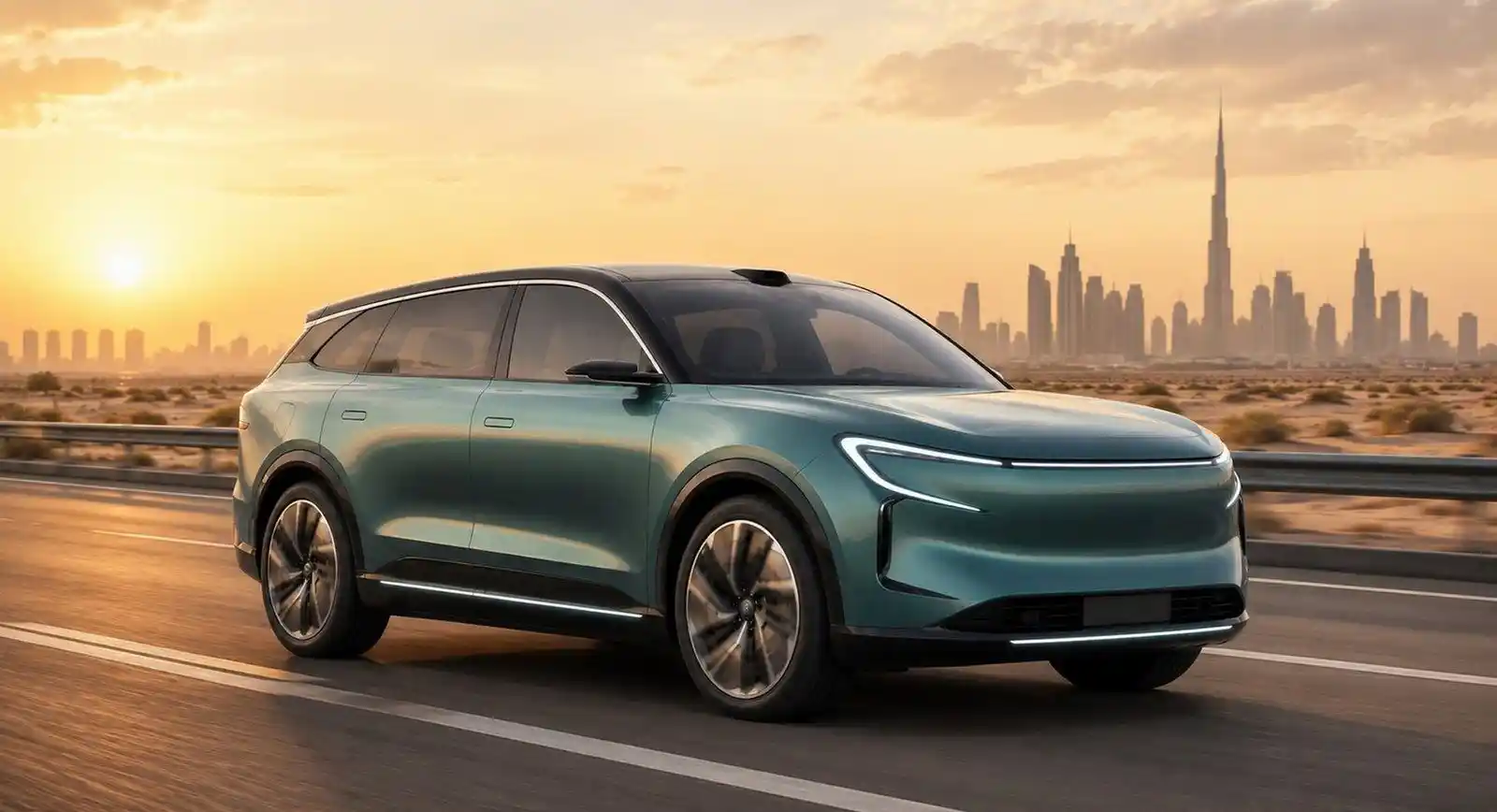
Desert light, aerospace precision and quiet intelligence, expressed without a fake grille or exposed sensor crown. China proves what customers now expect; HyperQ synthesises the principles without copying the shapes.

Original A surfaces, design patents, trademark clearance and trade dress review are required before public reveal.

01

Q-Arc

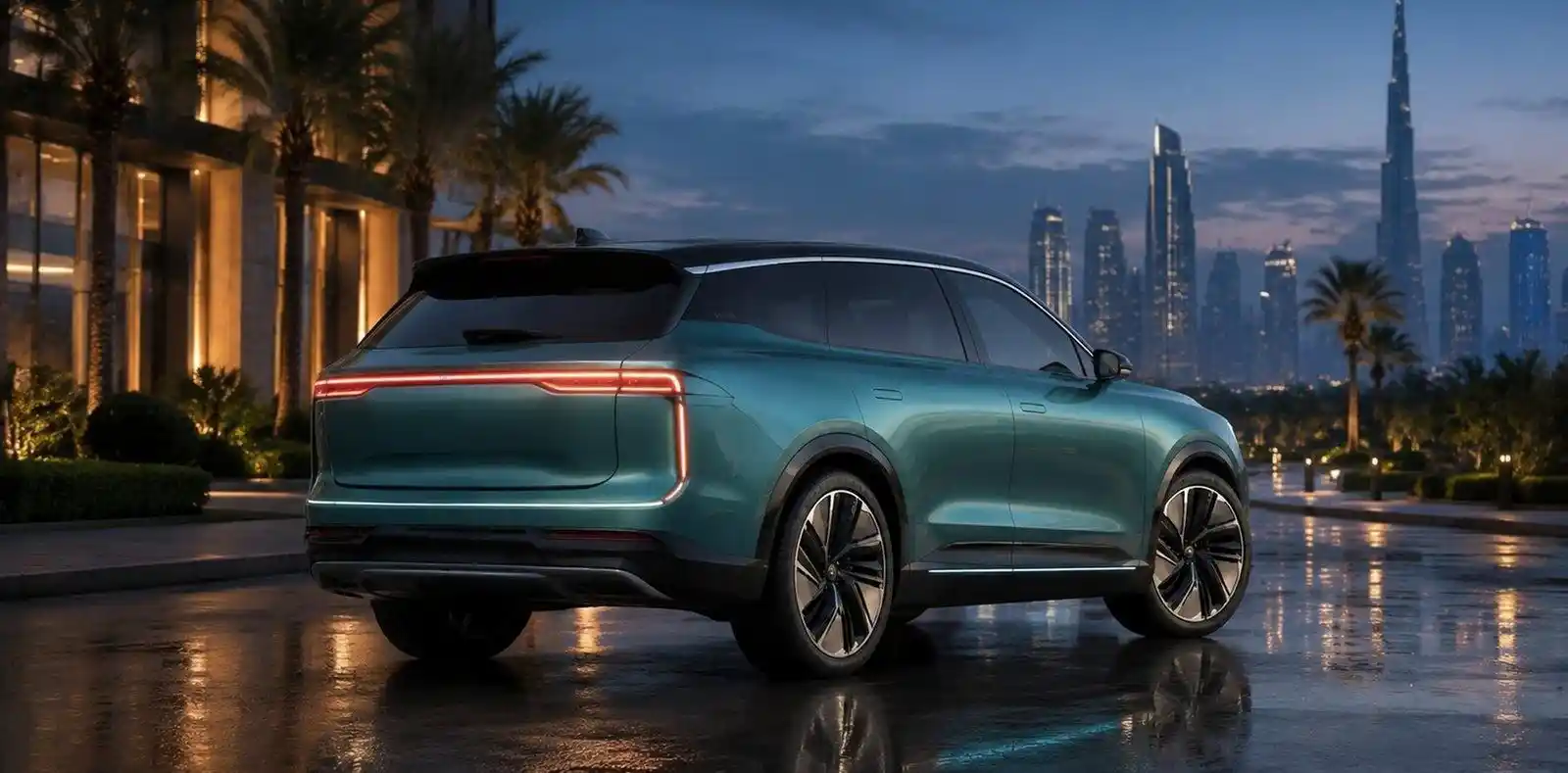
An interrupted light form opening at four o’clock, front and rear. One signature across four silhouettes.

02

Desert horizon

One calm shoulder line shaped by wind, never ornament.

03

Q-Crown

A replaceable dark glass sensor datum, present only when hardware requires it.

04

Bridge handles

Aerodynamic, graspable and mechanically operable in an emergency.

mob-nur-front

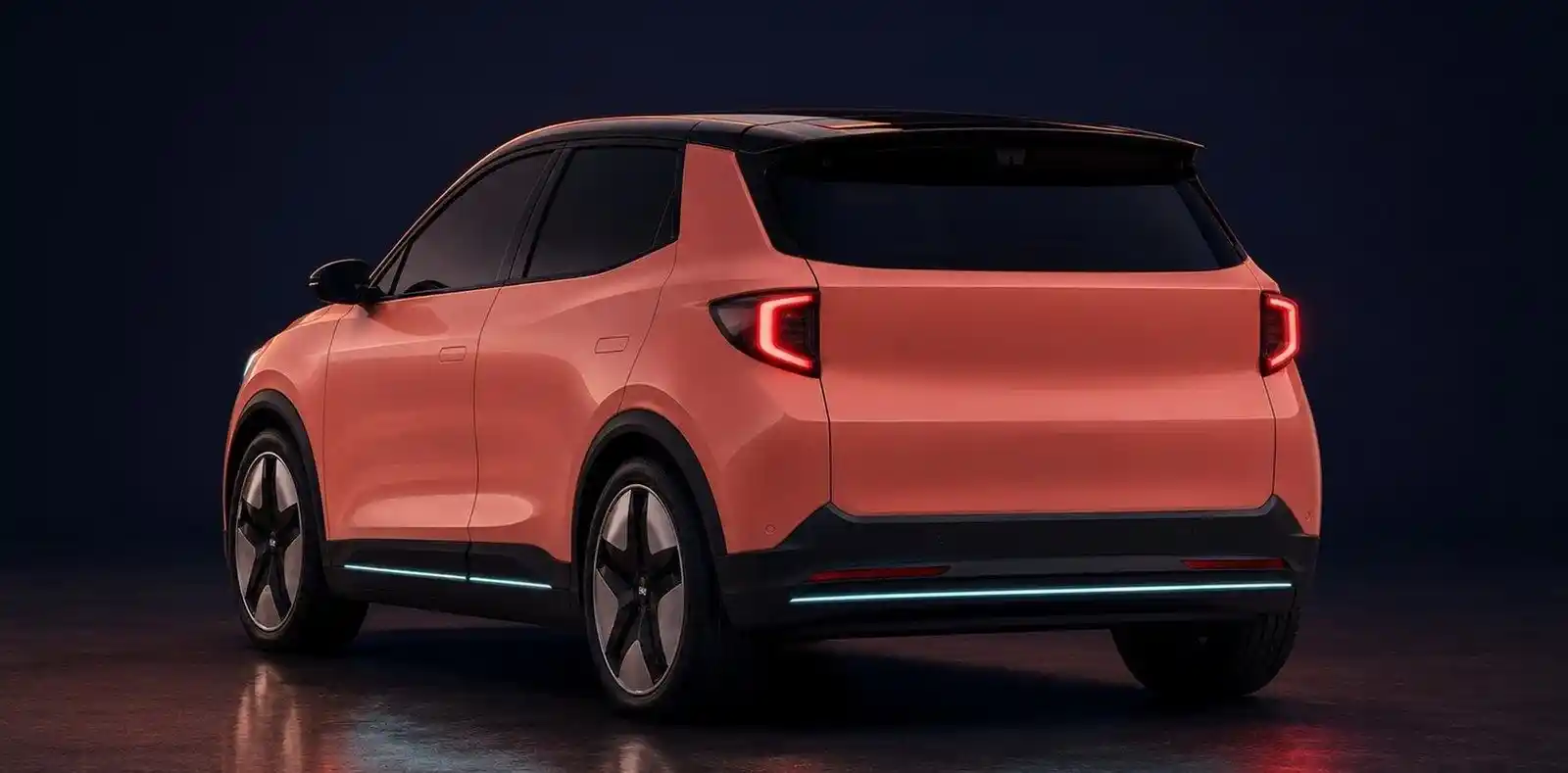
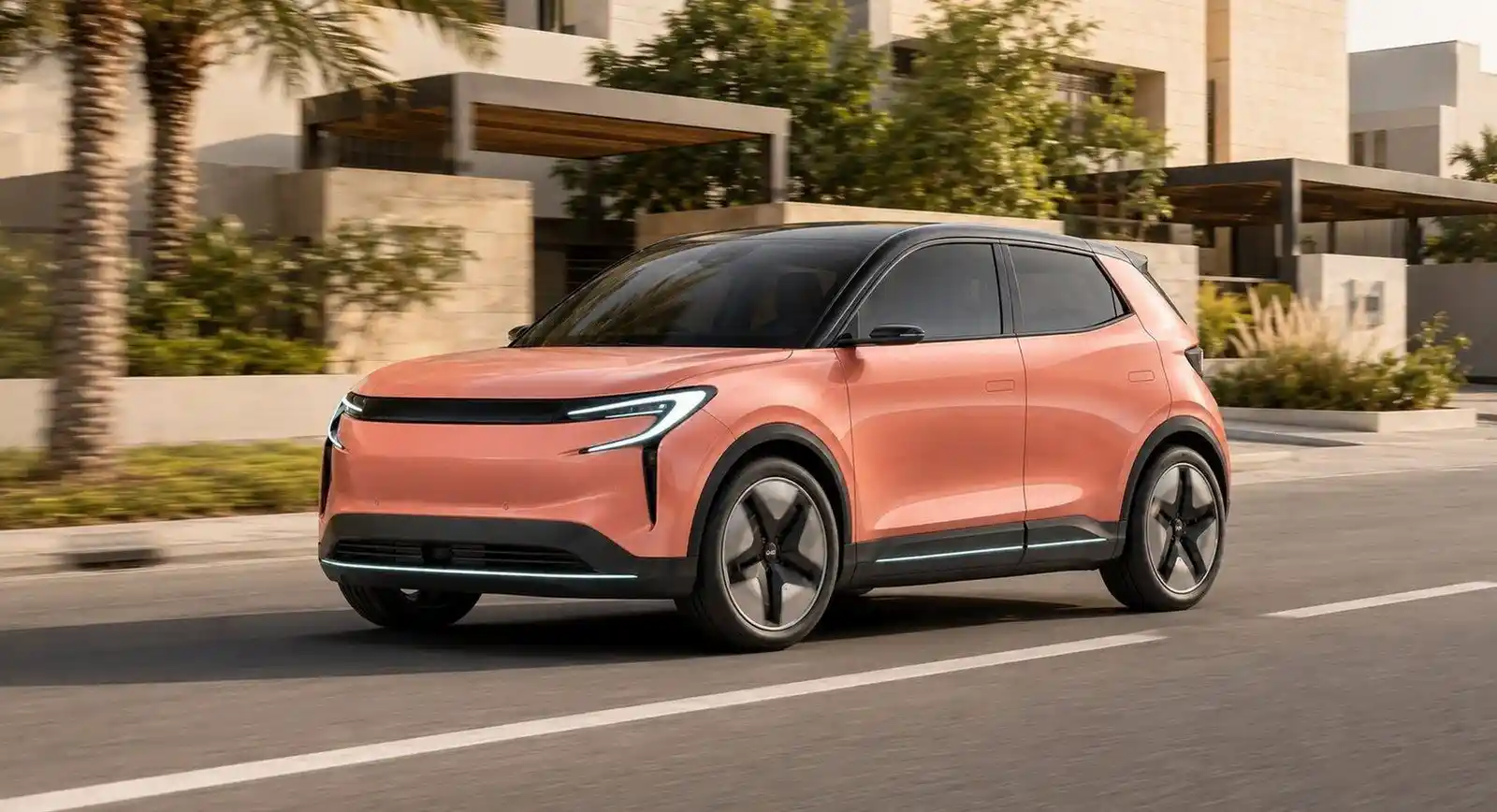
NUR

Intelligent mobility begins with a car people can actually own.

Supervised SAE Level 2. An optional fleet pod adds forward lidar and additional HyperQ compute for approved geofenced service. Vulnerable road user protection is a core release gate.

0 kWh

usable LFP target

380to 380 km

WLTP range target

0 min

10 to 80% charge target

0 min

10 to 80% charge target

A small footprint with serious presence

Cd 0.25 target on 18 inch aero wheels; 150 kW rear drive; 0 to 100 km/h target 7.5 s.

Calm visibility, compact turning behaviour

The launch vehicle remains driver supervised. Clear state communication and safe handback behaviour are mandatory from the first delivery.

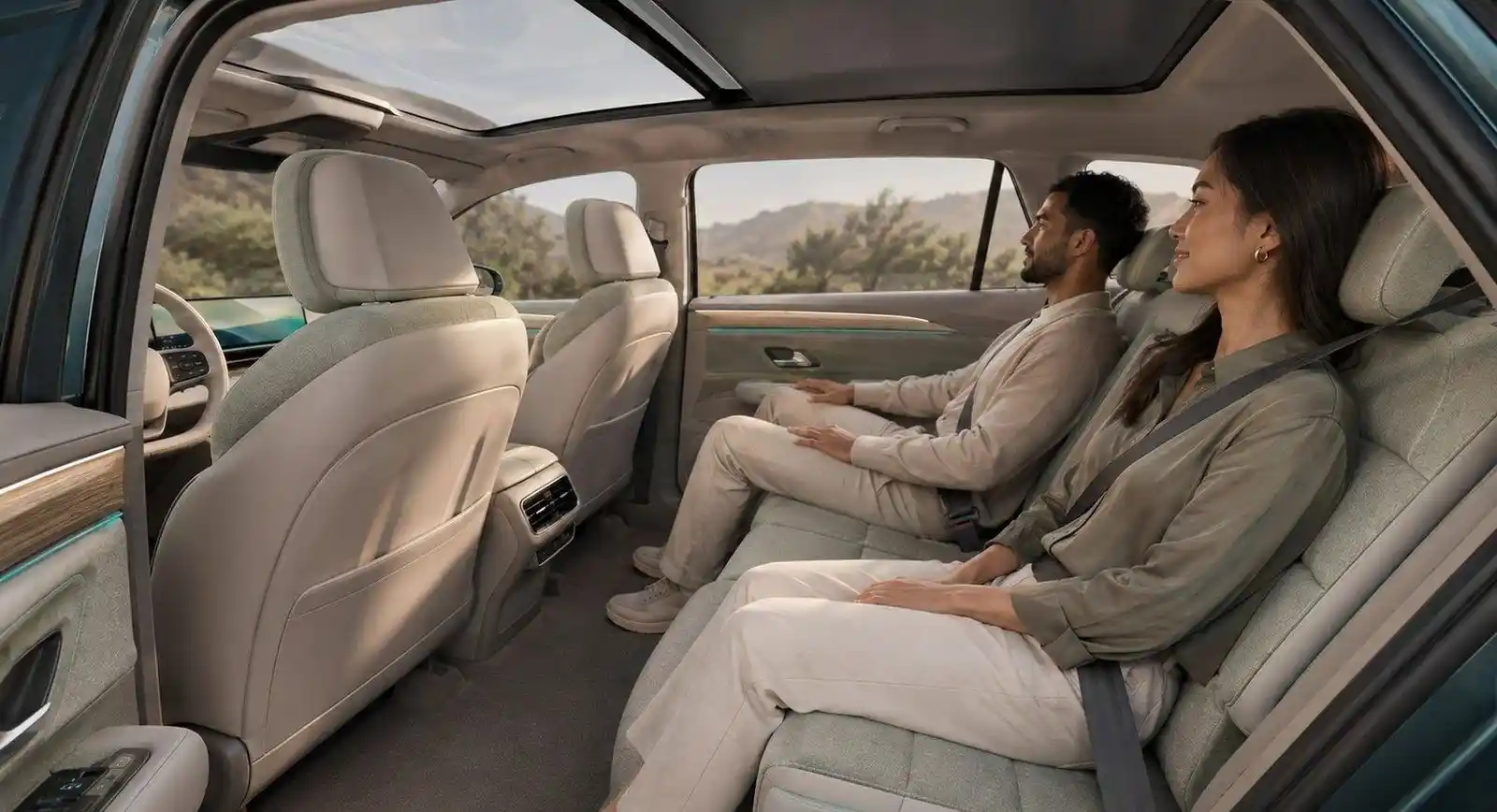
A bright cabin feels one class larger

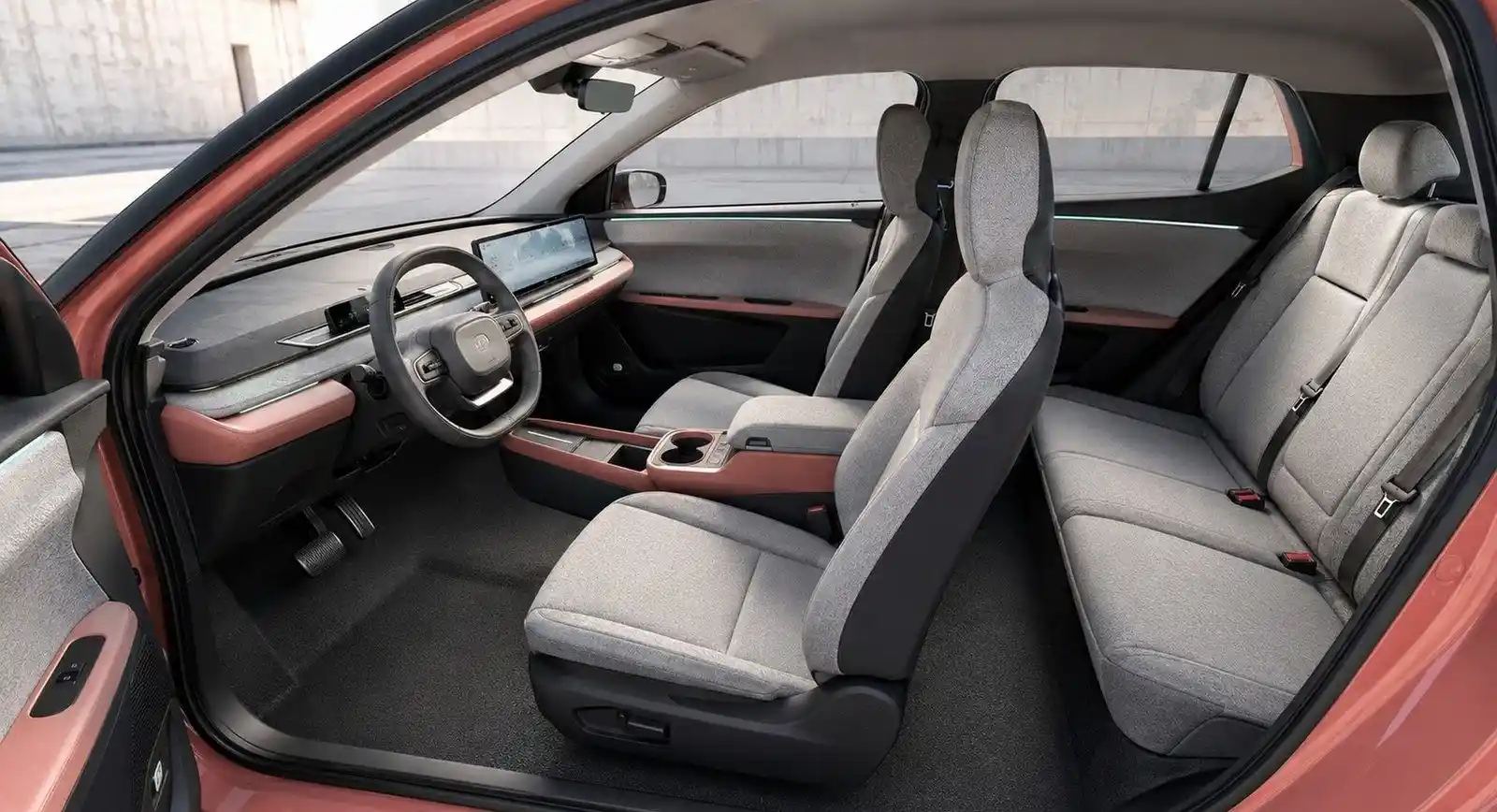
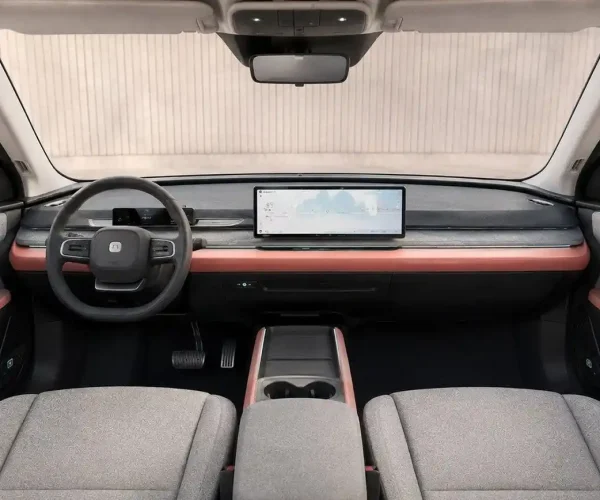
Five real seats, a flat floor and honest materials: light grey recycled weave, terracotta bio composite trim and durable touchpoints.

Every millimetre works twice

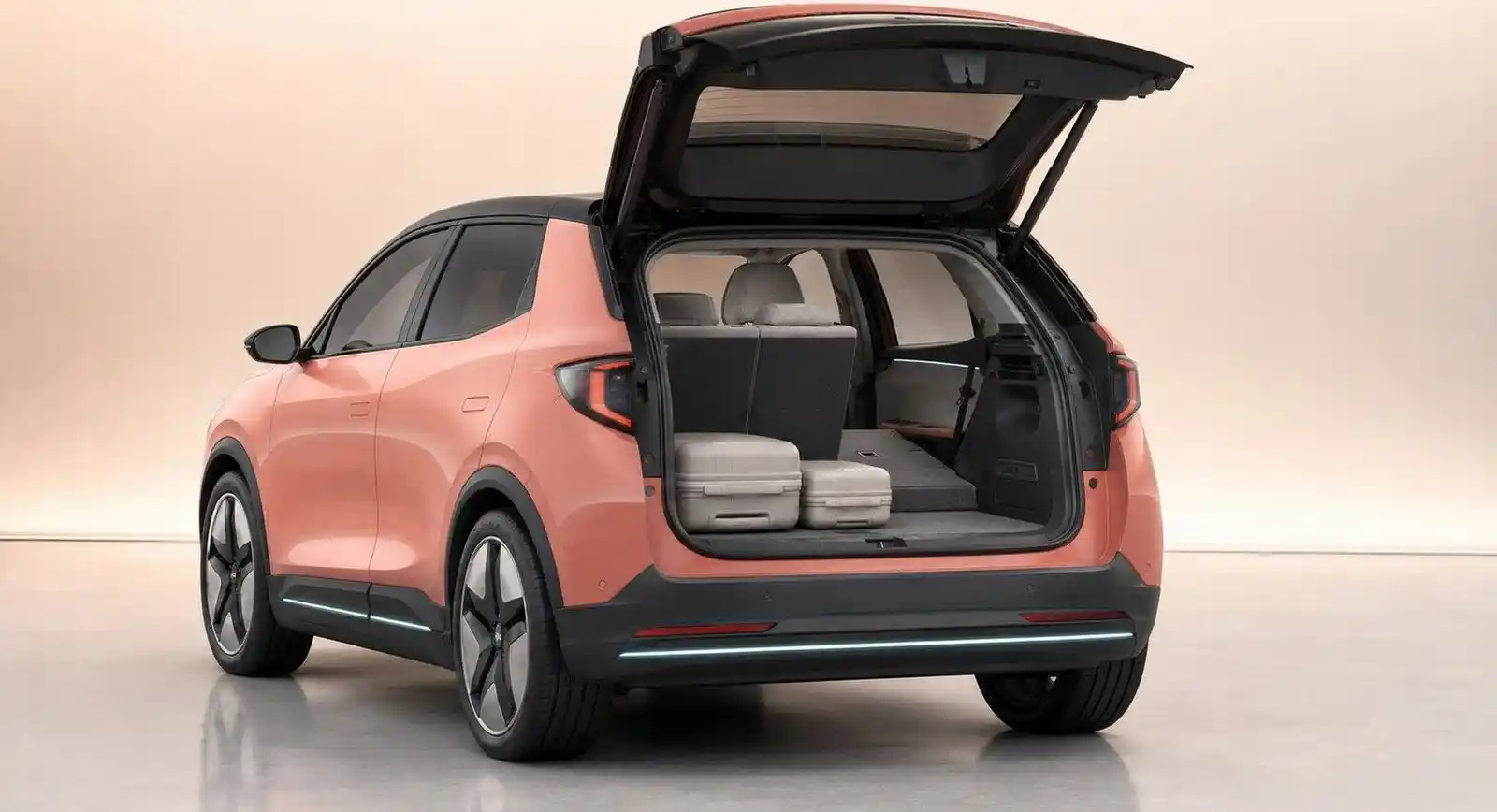
330 plus litres of rear cargo, a useful frunk, a flat fold rear bench and vehicle to load as standard.

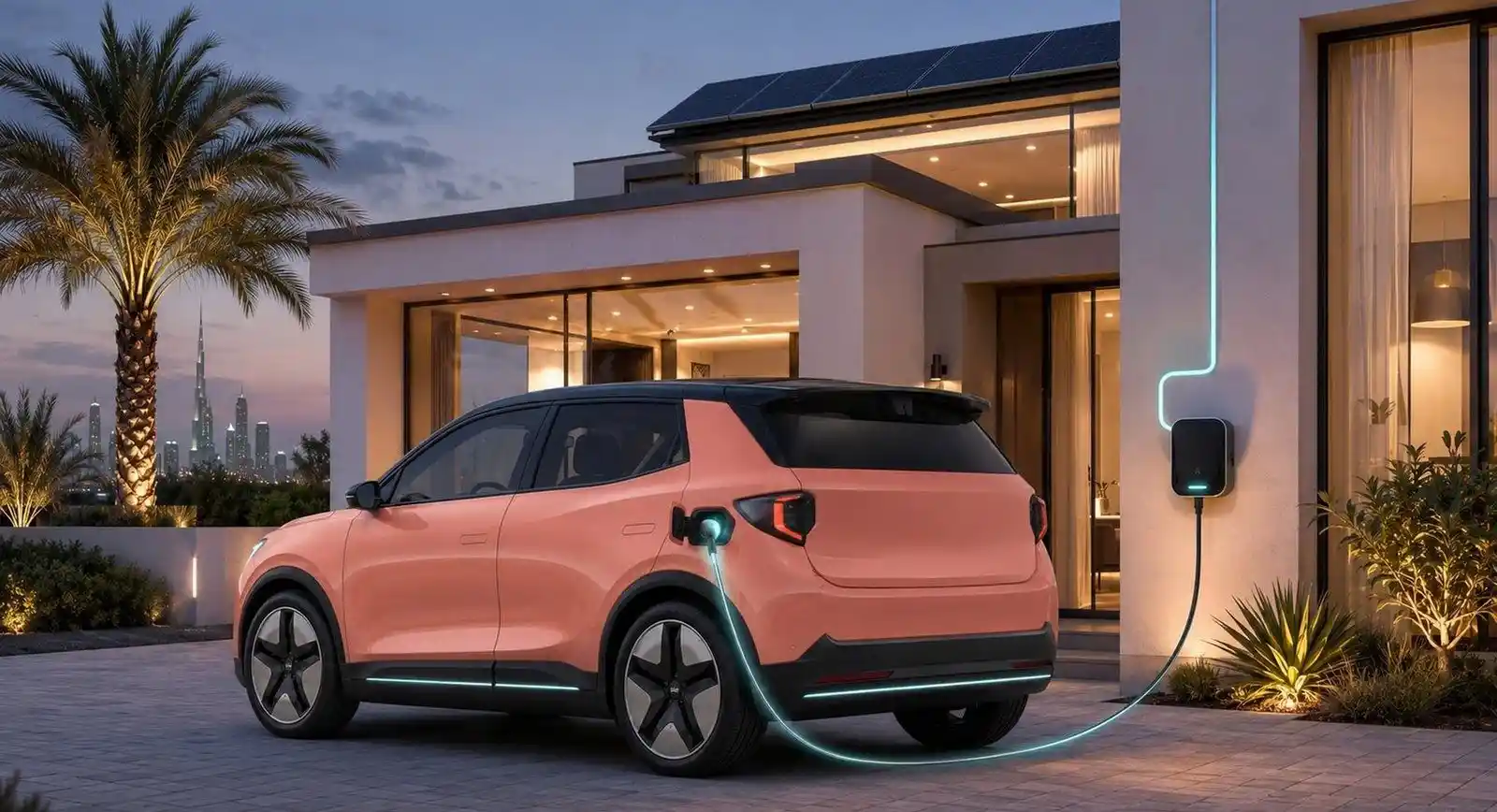
Grid interface

Vehicle to home and vehicle to grid are enabled only where local grid, connector and utility rules permit it.

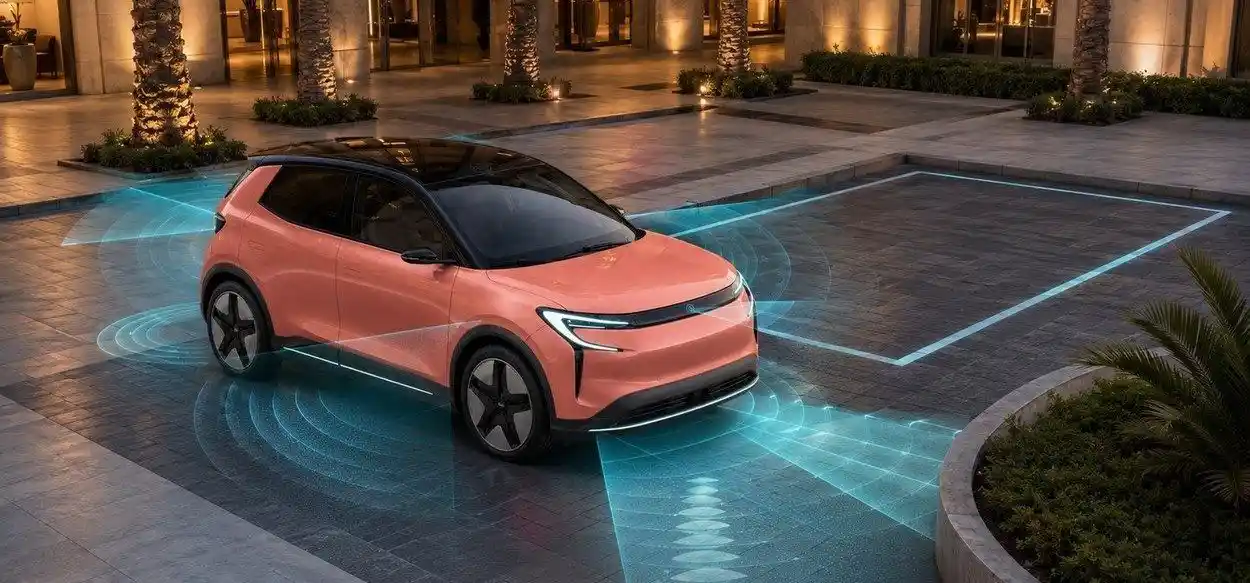
Low speed parking perception

8 cameras and 5 radars, 12 ultrasonic sensors, 150 to 200 vendor rated INT8 TOPS of HyperQ compute.

NUR PRODUCTION INTENT

Simple hardware, clear supervision and modular fleet capability. Safety and climate controls remain physically accessible; the voice agent is isolated from safety critical control.

HV CLASS
400 V
BATTERY
55 kWh LFP target
DC PEAK
160 kW target
DRIVE
150 kW rear drive
SENSING
8 cameras, 5 radars, 12 ultrasonic
COMPUTE
150 to 200 INT8 TOPS, vendor rated
mob-nur-dash
mob-rihla-front

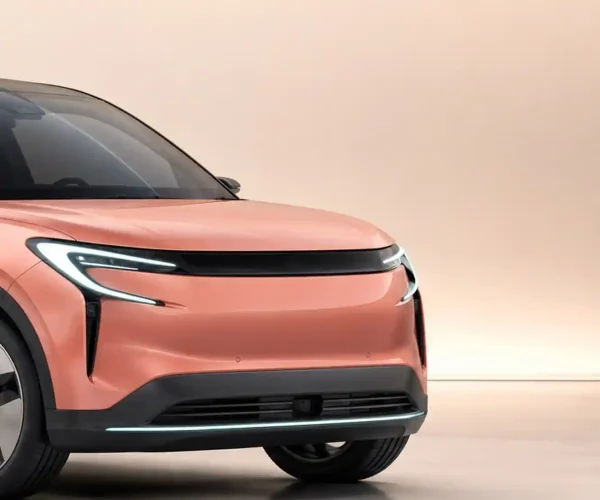
RIHLA

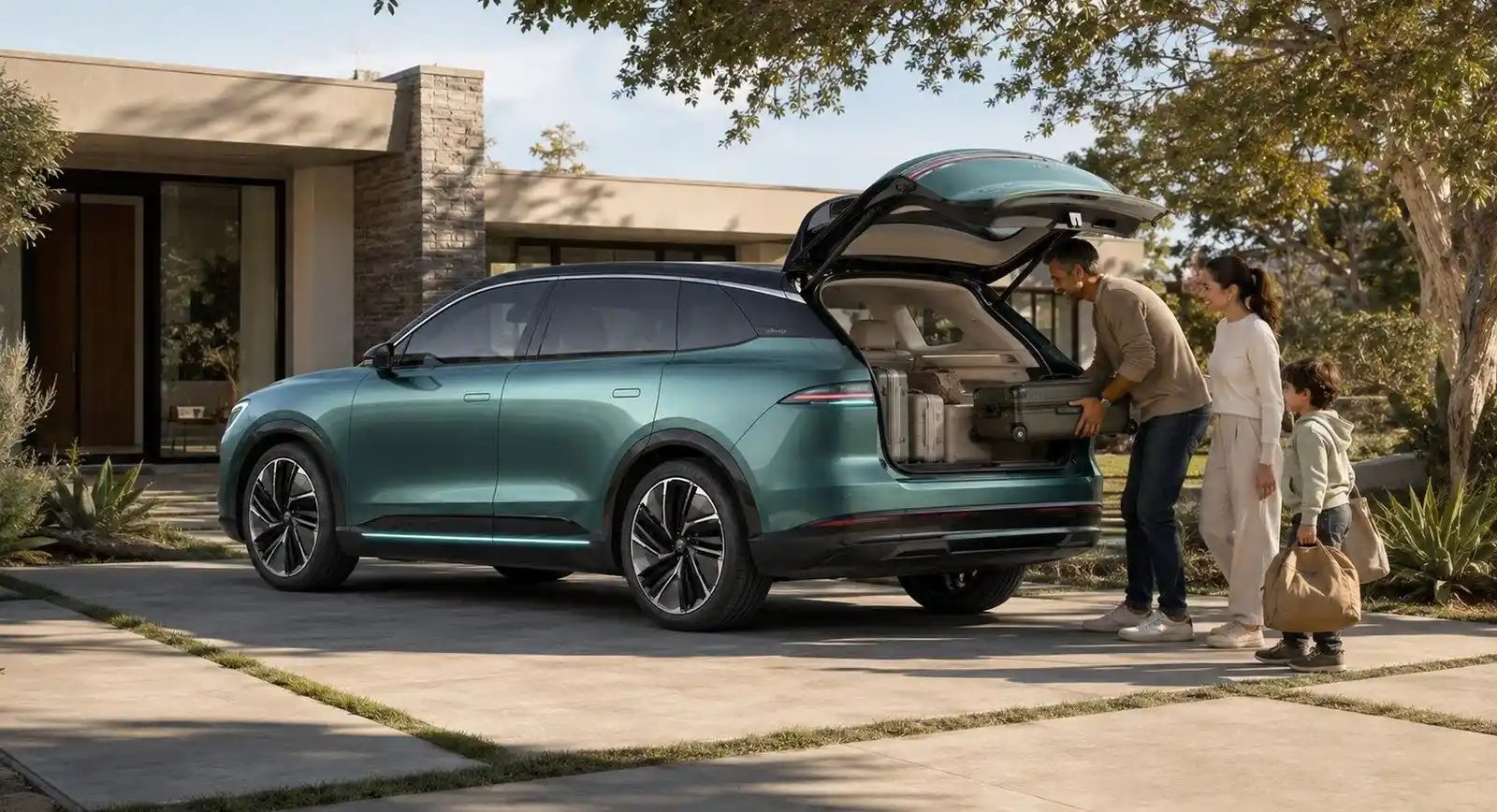
A global volume crossover designed around heat, family life and useful time.

The family crossover is the portfolio’s volume and commonality engine: long wheelbase comfort without urban bulk, built for Dubai and legible in America.

Supervised SAE Level 2. Hardware ready for conditional Level 3 only where the function and operating domain are approved. Series production target H2 2028, only with immediate licensed platform and experienced OEM execution.

78or 50 kWh

LFP or NMC target

500or 500 km

WLTP range target

15 to 0 min

10 to 80% charge target

0 m

wheelbase inside a 4.68 m body

Long wheelbase comfort without urban bulk

Cd 0.24 target; 20 or 21 inch wheels; rear or all wheel drive; air suspension reserved for upper trims.

Gulf engineering

IR rejecting glazing, an opaque roof shade, cooled seats and thermal reserve for solar load, high ambient temperature and long distance efficiency.

U.S. engineering

Cold pre conditioning, salt protection, region specific charging and a compliant connected vehicle stack.

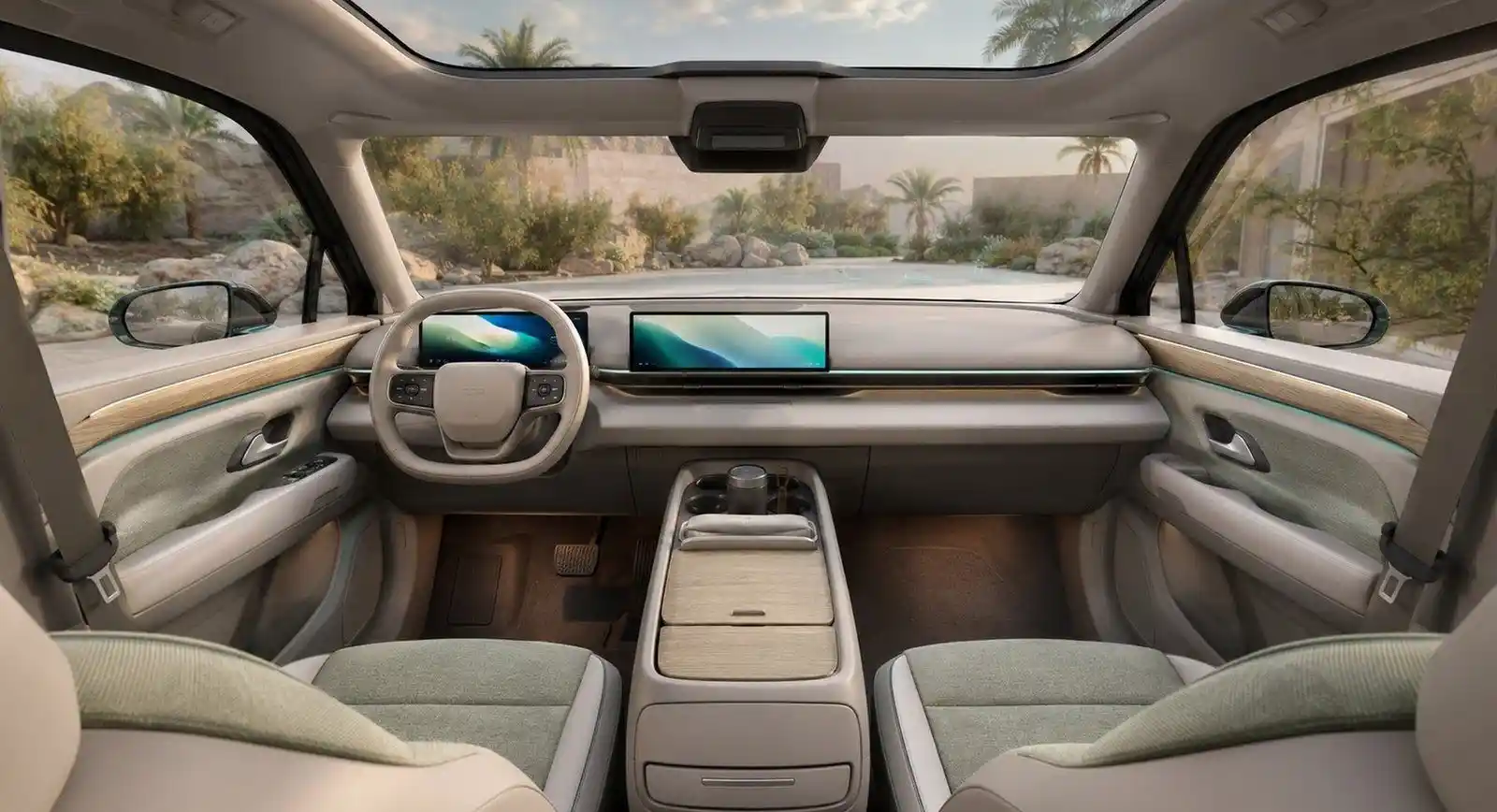
The interface supports the family, then disappears

A low dashboard, configurable console and clear autonomy state communication. The companion cannot directly command safety critical functions; that boundary is enforced in hardware, not policy.

Family space is a system

A sliding rear bench, insulated glass, child presence radar, pet mode, protected cargo points and flexible storage. No safety feature is subscription gated.

Intelligence handles the difficult moments

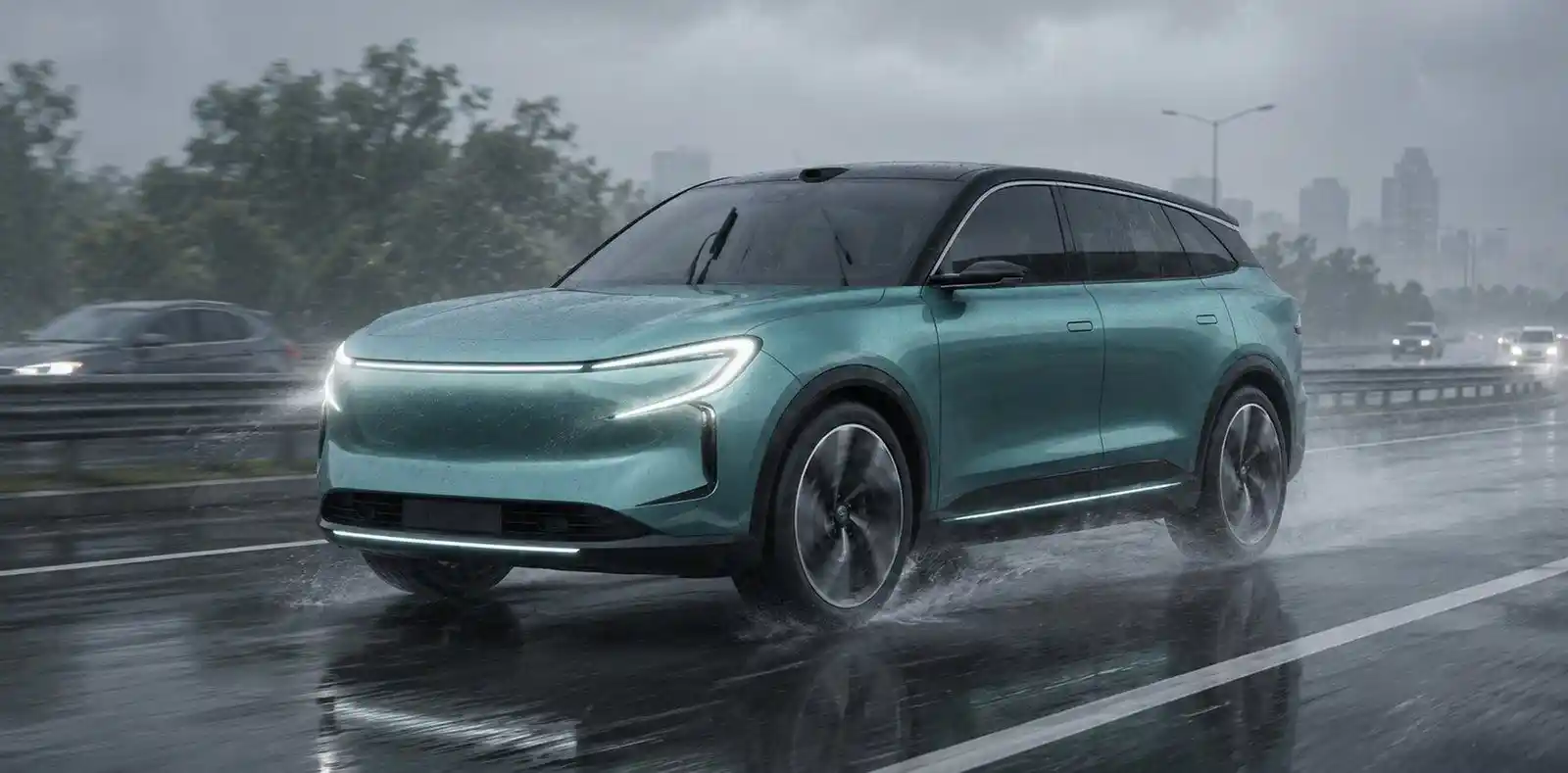
11 cameras, 5 imaging radars, 1 solid state lidar and 12 short range sensors, with heated and washable optical covers. Sensor quantity is not a safety case; validation is.

RIHLA PRODUCTION INTENT

RIHLA concentrates scale, parts commonality and the first 800 volt industrial learning curve, sharing E/E, BMS, thermal and motor families with AERON and MAJLIS.

HV CLASS
800 V
BATTERY
78 or 92 kWh target
DC PEAK
320 to 400 kW target, conditioned battery
DRIVE
210 kW rear drive or 390 kW all wheel drive
MODULE FAMILY
About 70% E/E and drive shared
SERIES PRODUCTION
H2 2028 conditional target

Engineering targets, subject to validation. Working model name, trademark and linguistic clearance required. Not a released specification or an offer.

AERON

The executive car stops performing status and starts returning time.

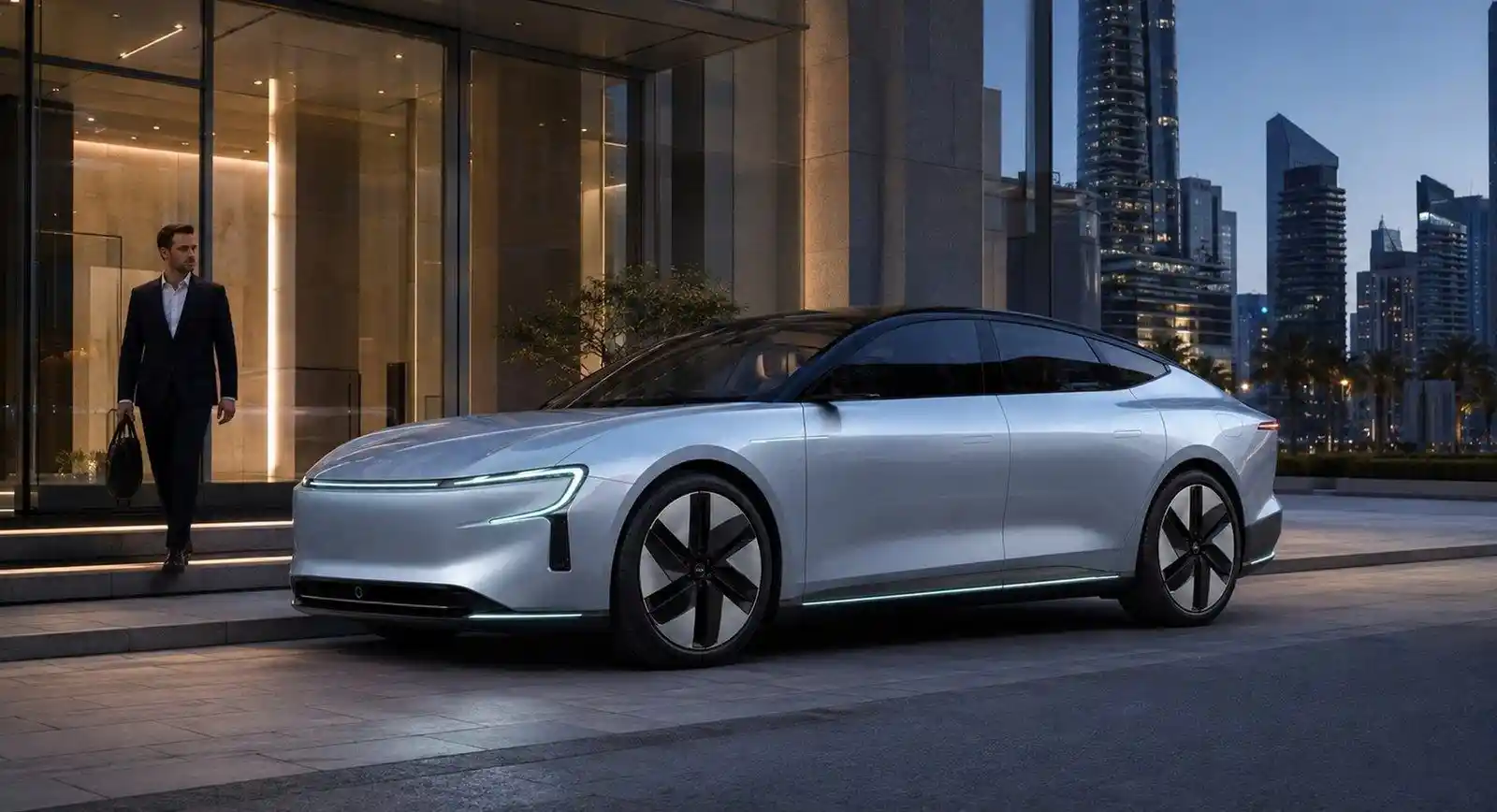
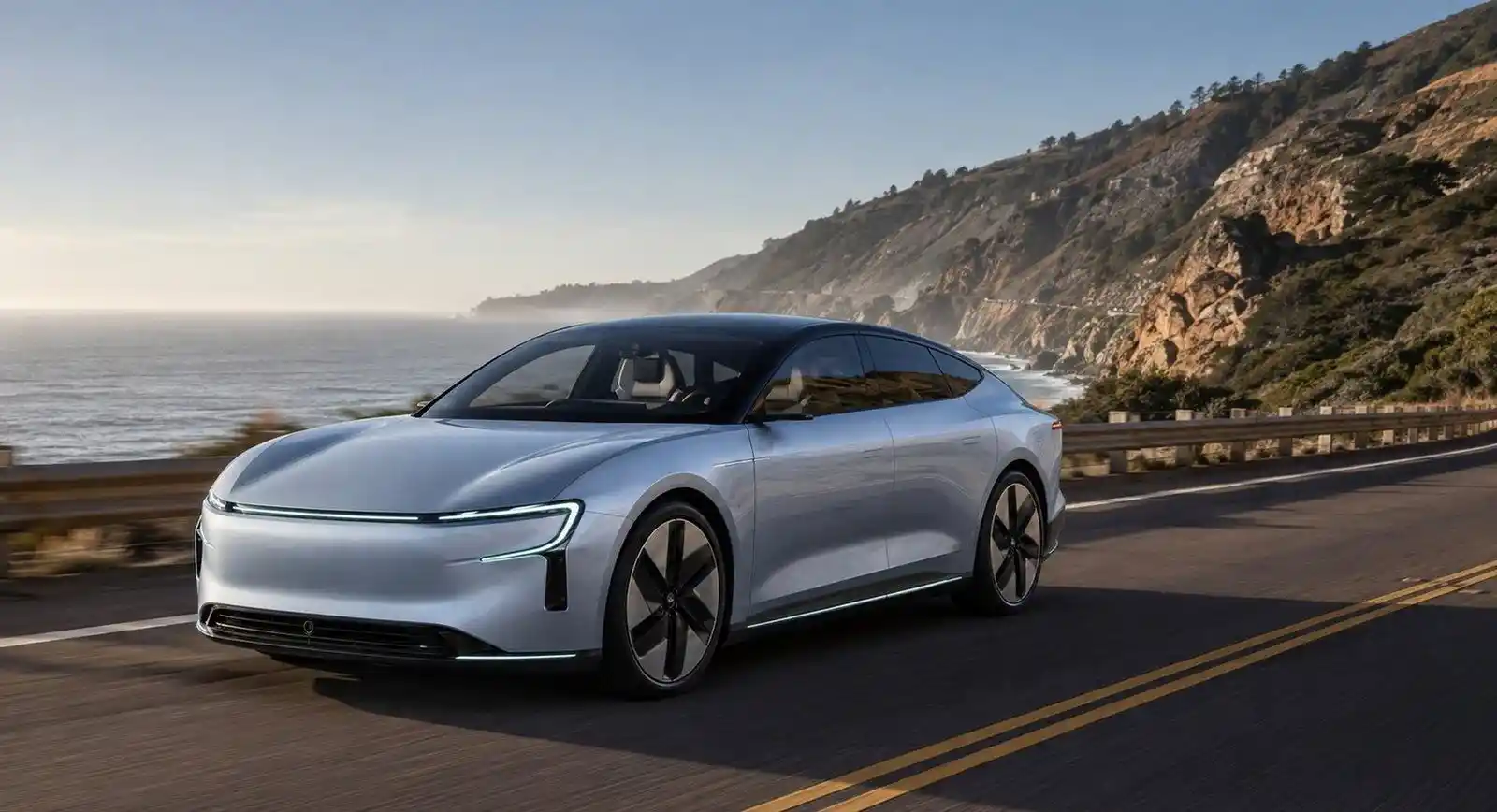
A fastback shaped by air, not fashion: low, calm and visibly efficient, designed equally for the Dubai financial district and the open American road.

Supervised SAE Level 2. Conditional Level 3 highway and traffic jam functions are targets subject to validation and approval. 2028 pre series demonstrator; series production target 2029 after full validation.

90 to 50 kWh

NMC target

610or 610 km

WLTP range target

13 to 13 min

10 to 80% charge target

0 s

0 to 100 km/h all wheel drive target

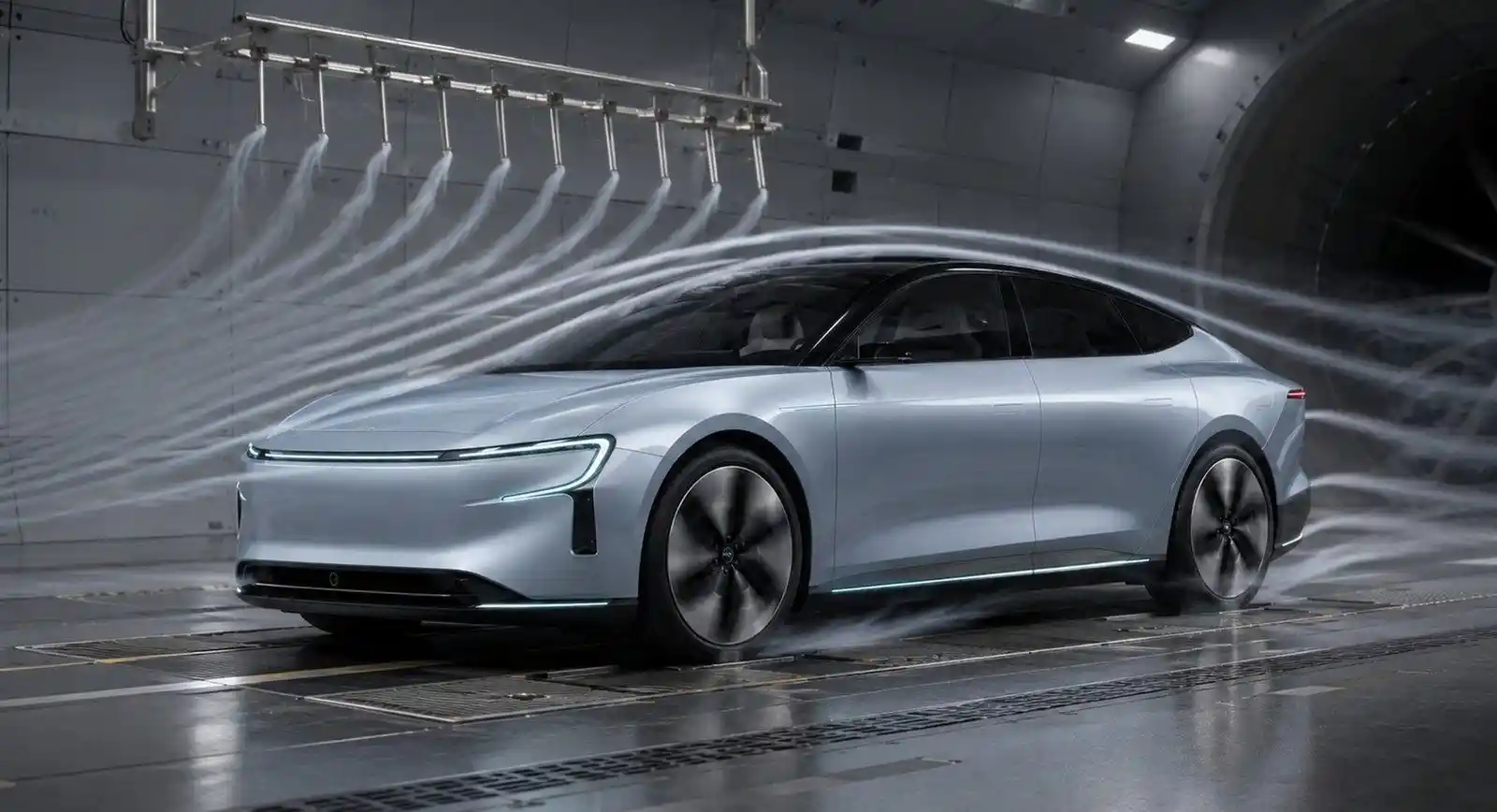
Shaped by air

Cd 0.20 to 0.21 target on a 3.02 m wheelbase and 21 inch turbine aero wheels; optional air suspension and rear steer; a five door liftback keeps the shape useful.

Arrival is quiet

Autonomous curb alignment inside an approved low speed zone. Automation never excuses unclear vehicle behaviour or hidden responsibility.

Progress is effortless

Controlled body motion, low wind noise and predictable intervention for long range stability and efficient high speed aerodynamics.

The front cabin becomes a focused workspace

A slim horizon display, AR HUD, sand microfibre and brushed titanium. The retractable control remains a concept target and requires market specific safety approval.

Executive comfort without sacrificing utility

Four zone climate, active noise cancellation, rear privacy and a four seat Executive option. Work mode is disabled whenever the driver remains responsible.

Aero is an engineering gate

The target range depends on low drag, thermal efficiency and real mass control, not simply a larger battery. Every show surface must survive tooling, repair and environmental validation.

AERON PRODUCTION INTENT

AERON shares the 800 volt core, then adds rear steer, chassis bandwidth and cabin finish: two HyperQ compute domains plus an independent safety controller.

HV CLASS
800 V
BATTERY
90 or 105 kWh NMC target
DC PEAK
420 to 480 kW target, conditioned battery
DRIVE
250 kW rear drive or 500 kW all wheel drive
COMPUTE
Two HyperQ domains plus independent safety controller
SERIES PRODUCTION
2029 target, 2028 pre series demonstrator

Engineering targets, subject to validation. Working model name, trademark and linguistic clearance required. Not a released specification or an offer.

mob-majlis-front

MAJLIS

Dubai hospitality becomes a six seat electric vehicle architecture.

A six seat monovolume becomes dignified through proportion, light and material restraint. Hotels, airports and sovereign fleets need a complete curb to cabin experience; the flagship is designed around access and cabin dignity, not an oversized grille.

Consumer target: Level 3 only where approved. Fleet target: geofenced Level 4 with redundant controls, HyperQ remote assistance and authority approval. 2028 pre series demonstrator; series production target 2029.

105to 105 kWh

LFP or NMC target

540or 600 km

WLTP range target

14 to 14 min

10 to 80% charge target

0 s

length on a 3.30 m wheelbase

A new silhouette for executive mobility

Cd 0.23 target; 22 inch production wheel; dual sliding doors; air suspension and rear steer as standard.

Arrival becomes part of the service

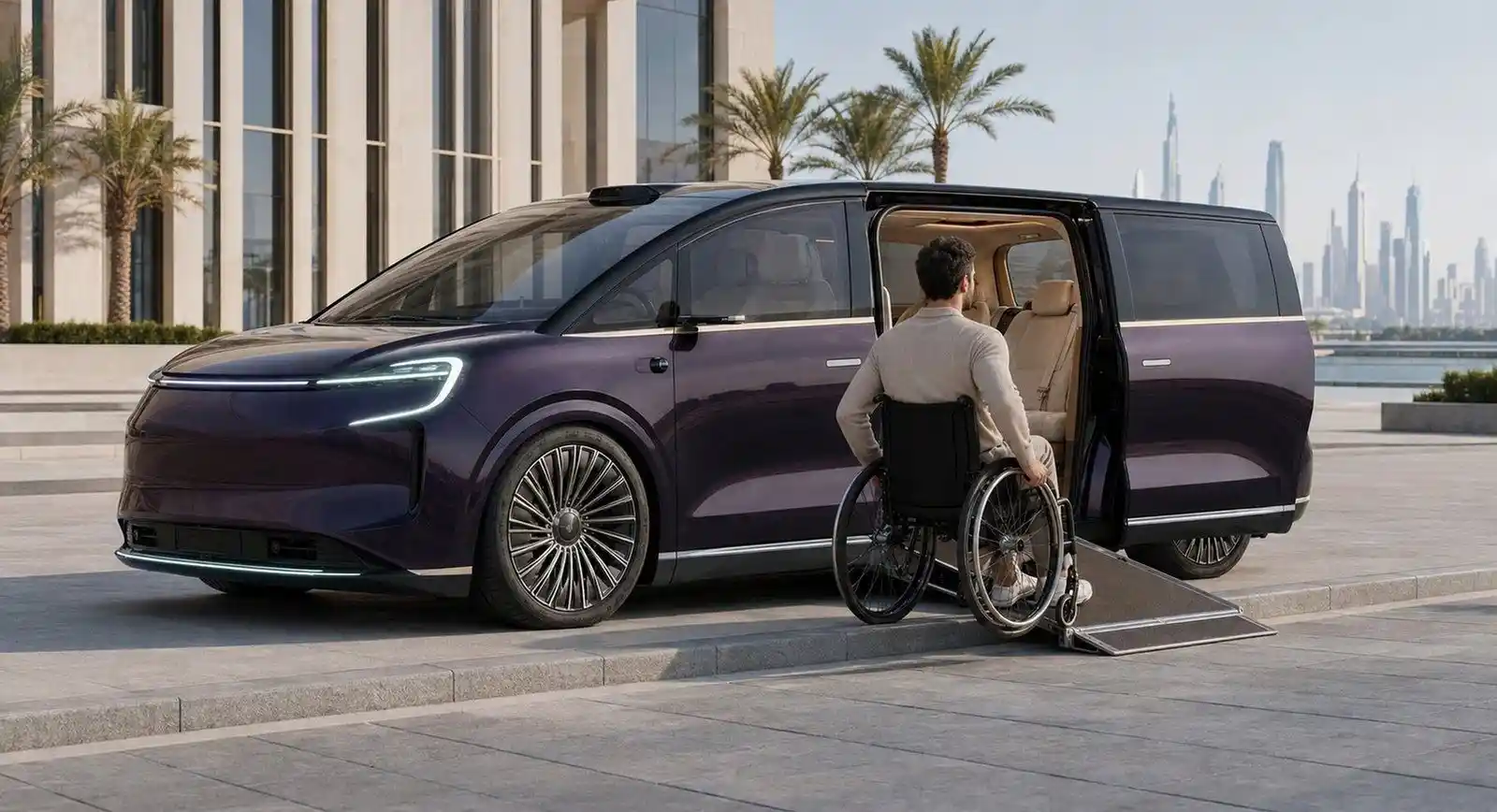
Wide power door, warm cabin reveal and precise curb alignment: pre conditioned arrival, verified passenger identity, privacy controls and accessible boarding.

Fleet support

Luggage, passenger flow and fleet dispatch designed together, with accountable dispatch, remote assistance and incident state on the HyperQ Fleet OS.

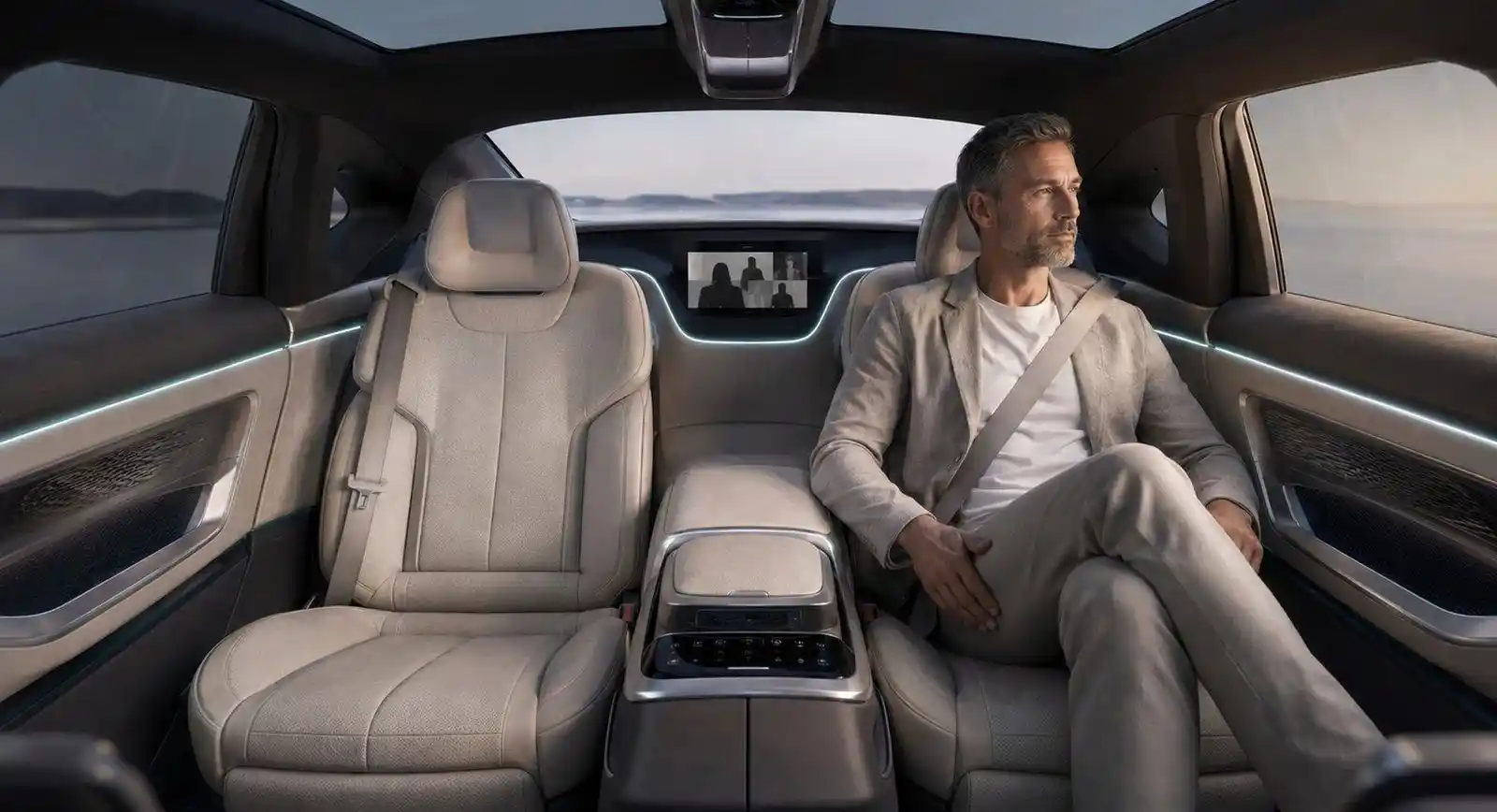
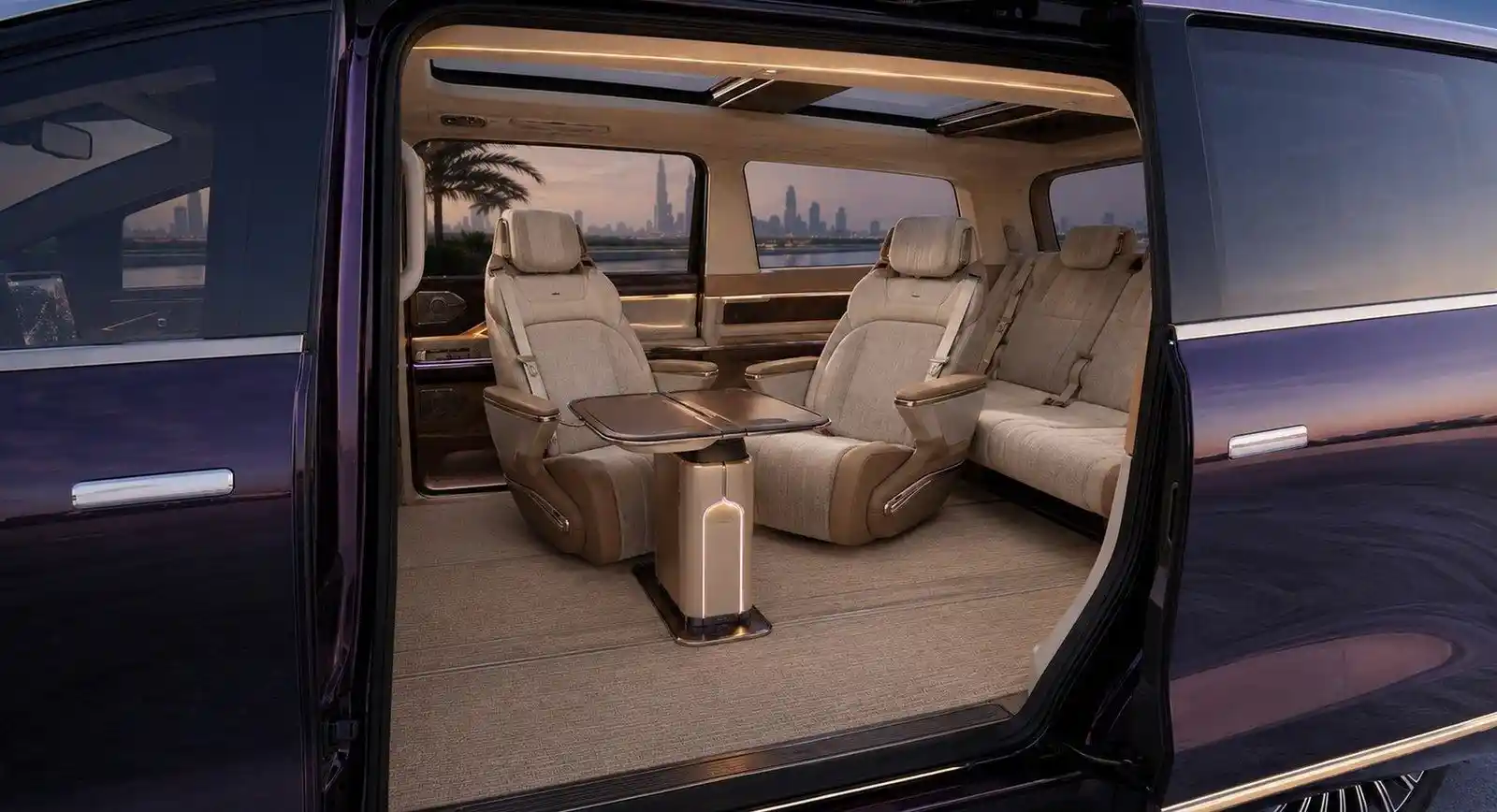
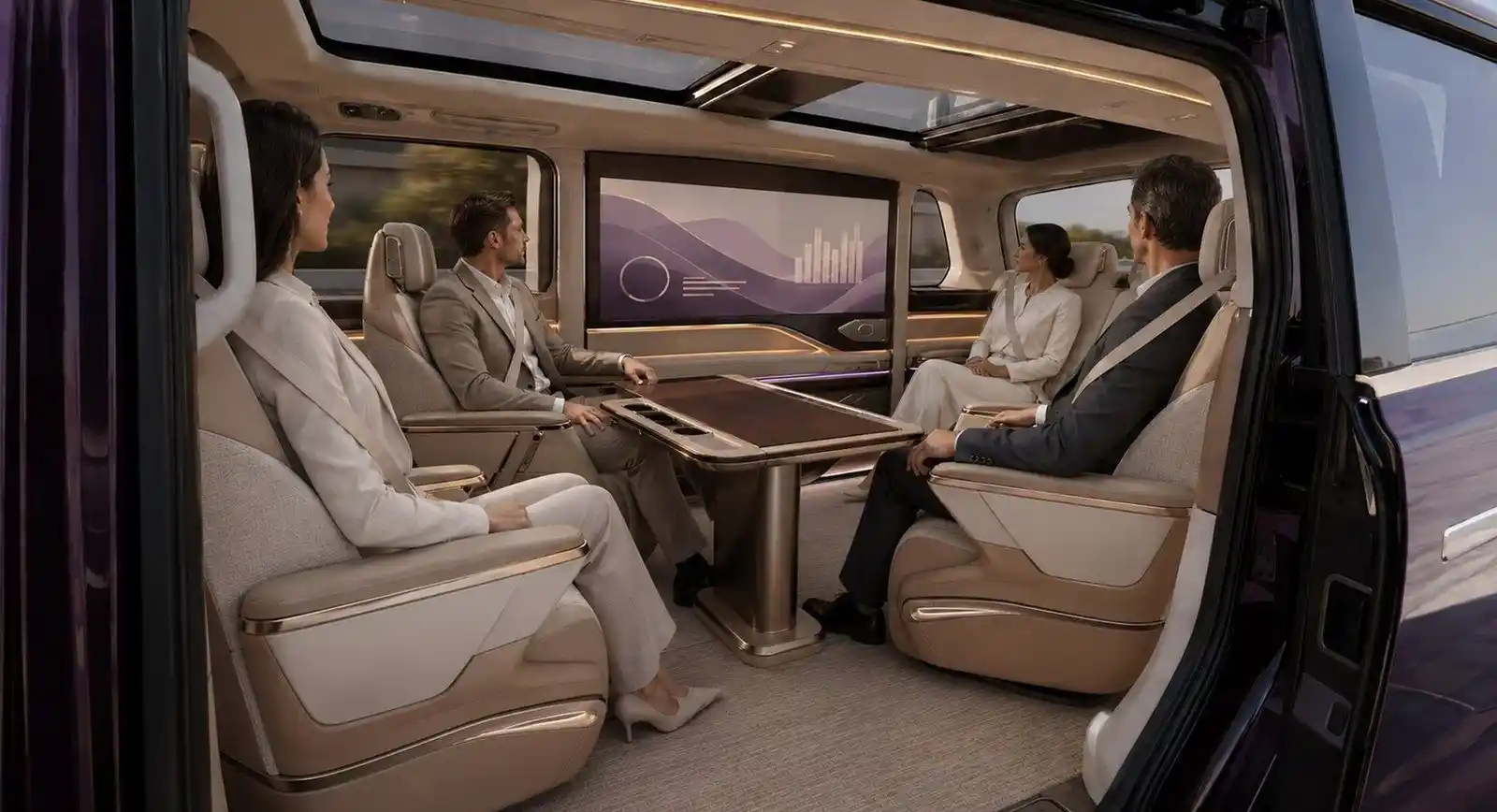
The rear cabin becomes the primary cabin

Road safe 2+2+2 orientation with a true flat floor; five zone climate, layered privacy glass, warm textile surfaces and low visual noise.

Four seat and six seat worlds share one architecture

Swivel capable seats, a deployable worktable, privacy mode, presentation display and refrigerated storage. The lounge transforms only while parked or during an authorised Level 4 journey; certified seat positions and restraint geometry govern every mode.

Luxury is access, privacy and safety

Low kneel suspension and an integrated ramp concept: seamless inclusion rather than a visibly separate conversion. Requires ramp angle, securement and crash validation.

MAJLIS PRODUCTION INTENT

Vehicle redundancy, remote assistance, depot discipline and incident response travel together. Two 500 TOPS class HyperQ compute domains plus an independent safety path.

HV CLASS
800 V
BATTERY
105 or 120 kWh target
DC PEAK
450 to 520 kW target, conditioned battery
DRIVE
420 kW dual motor all wheel drive with rear steering
SEATING
2+2+2 six seat core
SERIES PRODUCTION
2029 target, 2028 pre series demonstrator

Engineering targets, subject to validation. Working model name, trademark and linguistic clearance required. Not a released specification or an offer.

The vehicle sees; the operating system understands context.

Diverse sensing and infrastructure awareness complement one another; neither replaces a validated safety case.

01

Operational design domain

Cameras, imaging radar, lidar and inertial localisation. Every release is constrained by an explicit operational design domain held in the HyperQ Fleet OS.

02

Safe degradation

V2X can add signal and road context without becoming a dependency. The vehicle must degrade safely when weather, visibility, mapping, communications or infrastructure no longer meet that domain.

03

Autonomy begins with redundancy

Two HyperQ compute domains, isolated safety control, redundant power and secured networking: ECC memory, signed boot, hardware security and A/B OTA rollback, on a 48 V zonal E/E target.

Software defined, upgradeable and regionally sovereign.

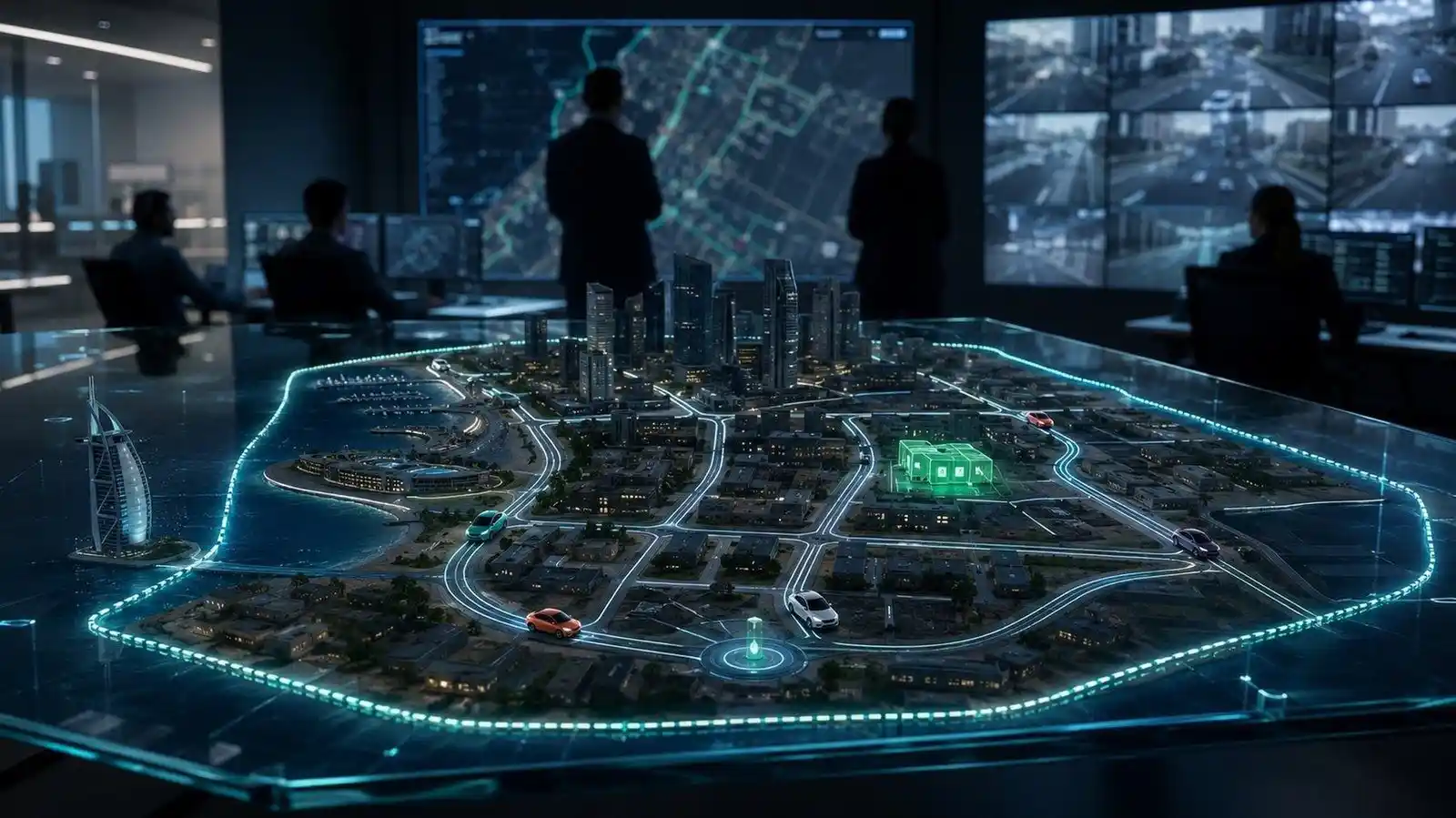
Vehicle software, data residency, depot workflow and remote operations run as one governed service on HYPERCUBE: geofence, route, depot and incident state in one operational digital twin.

UAE vehicle and fleet data remain in the UAE by default; U.S. vehicle and fleet data remain in the U.S. by default. Cabin personalisation is consent based and on device first. Safety critical partitions cannot be controlled by the companion agent.

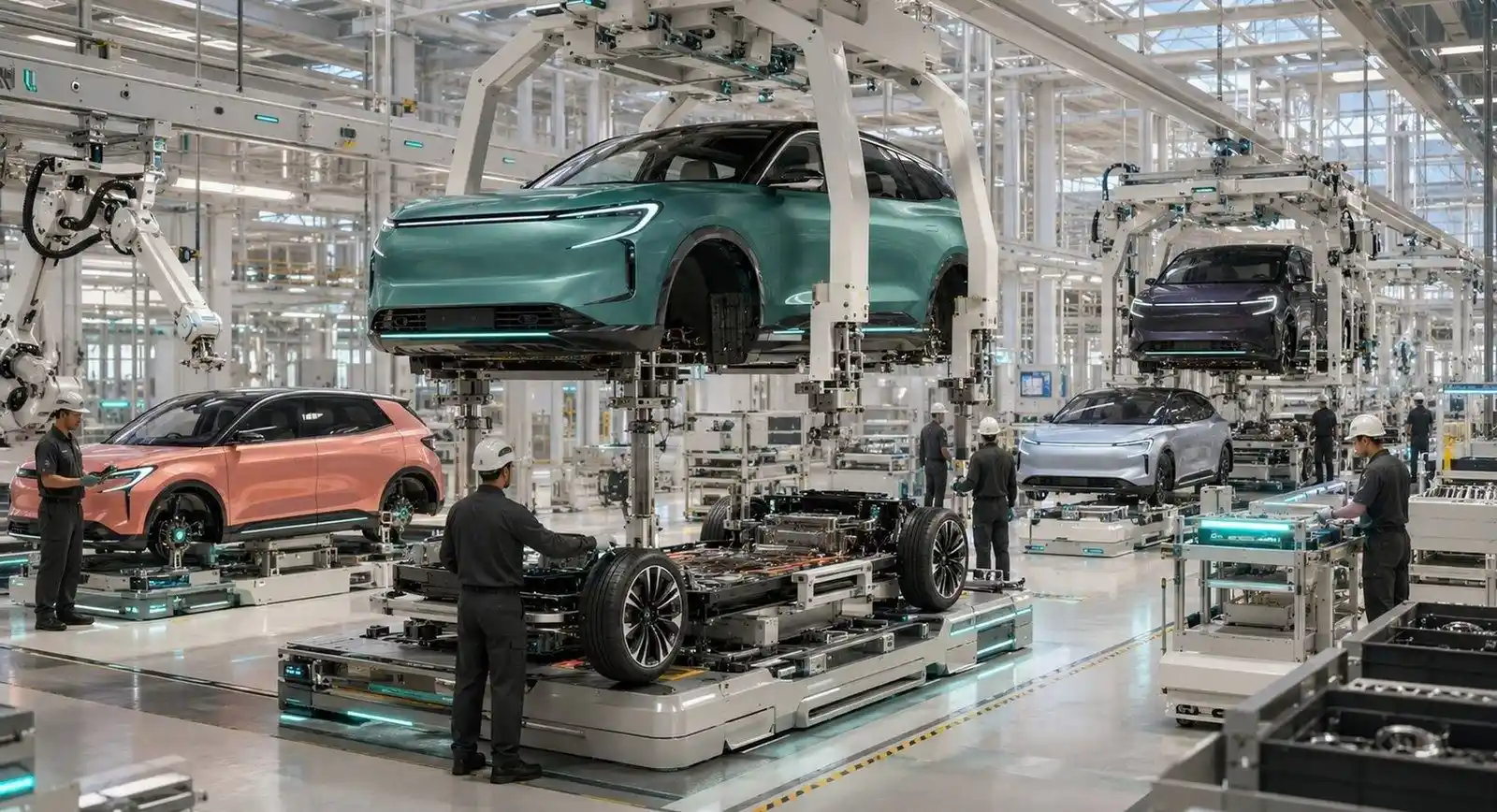
Two factories operate as one validated production system.

Common product data, quality gates and software release controls, with region specific supply chains.

Dubai

Assembly, pack, calibration and hot climate fleet commissioning. Dubai leads MENA industrialisation and operating domain learning alongside the HYPERCUBE campus.

United States

Local body, paint, pack and a compliant connected stack. Connected vehicle software, telematics, sensors and control hardware are localised through U.S. and allied sources; U.S. assembly alone does not resolve BIS connected vehicle restrictions.

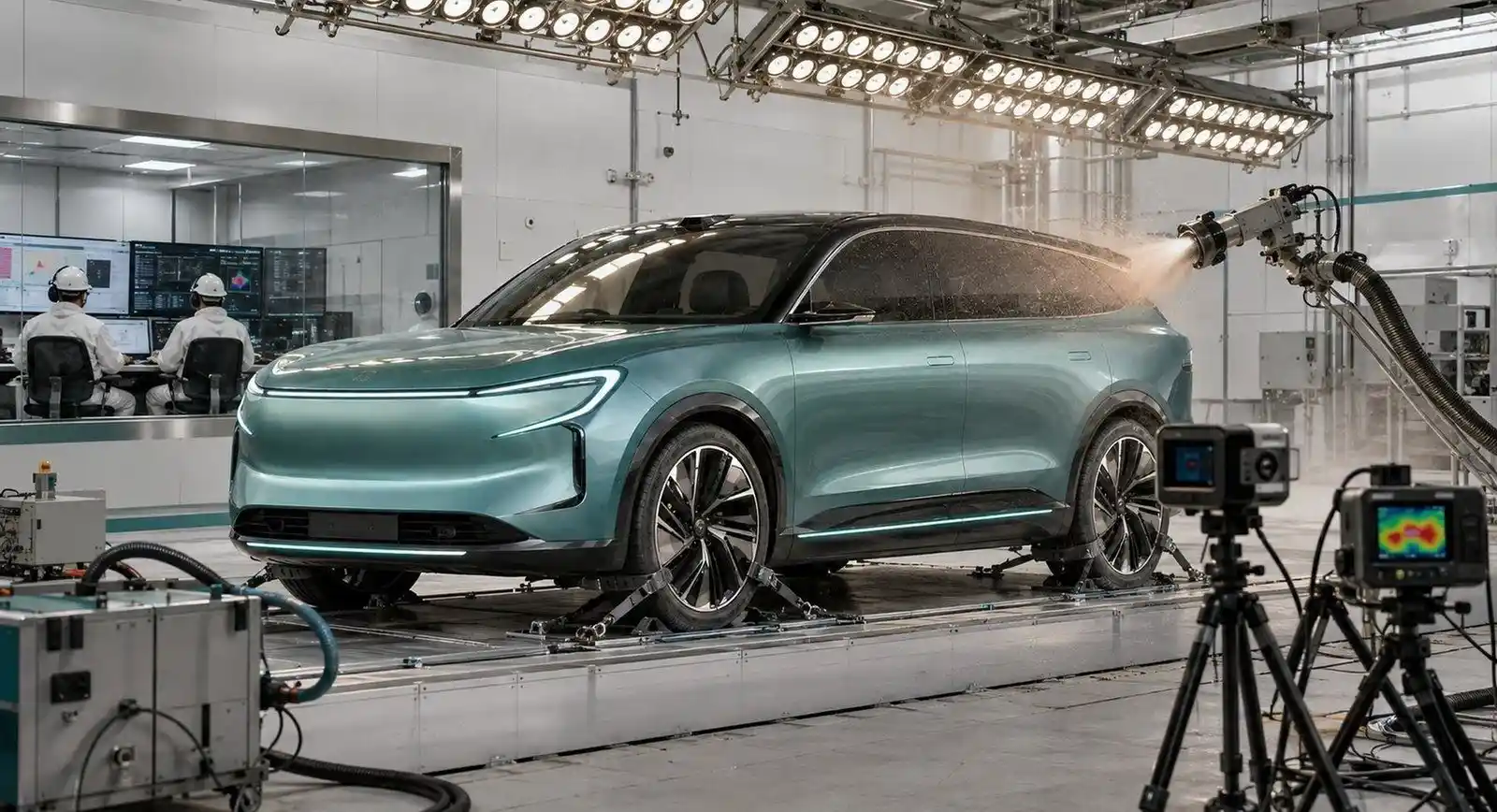
One platform must survive both extremes.

Hot dust and winter ice are not launch photography; they are release gates. Targets become claims only after independent test evidence.

Heat

55 degree C equivalent solar load, dust abrasion and cooling reserve validation. The evidence plan covers battery propagation, HVAC reserve, sensor contamination, corrosion and UV ageing.

Cold

Low friction, cold start, sensor heating and salt corrosion development, with crash performance, software safety, cybersecurity and human factors in the same evidence plan.

A gated 24 month plan converts design into production.

The programme moves only when platform, supplier, safety and factory evidence are ready.

01

Foundation, Q4 2026

Brand and trademark; licensed platform and OEM; regulatory strategy.

02

Design freeze, H1 2027

Hard points and A surfaces; supplier nomination; factory and tooling orders.

03

Build, H2 2027

Alpha and beta fleets; HyperQ software integration; pilot line readiness.

04

Validate, H1 2028

Crash and environment; safety case and approvals; authority pilots.

05

Scale, H2 2028 to 2029

NUR and RIHLA conditional start of production; AERON and MAJLIS pre series; premium start of production target 2029.

A 2028 series launch for NUR and RIHLA is credible only if a licensed platform and an experienced manufacturing partner are contracted immediately. Four clean sheet series launches in both countries by September 2028 are not a credible base case.

Autonomous is a roadmap, not an unrestricted claim.

Capability, permission and responsibility remain visibly separate in every market.

Supervised L2, retail launch

The driver remains responsible and continuously engaged. Clear state communication, driver monitoring and safe handback behaviour are mandatory.

Conditional L3, approved function

The system performs the driving task only inside its validated operating domain and only after the relevant market authorises the function.

Geofenced L4, fleet service

No in vehicle driver is required inside the approved domain, but HyperQ remote assistance, depot controls, insurance and incident response remain part of the system.

Dubai

Vehicle and operator permits, approved routes and operational design domain, UAE insurance and incident reporting under Law No. 9 of 2023 and Administrative Decision No. 939 of 2025.

United States

FMVSS, state permissions, NHTSA crash reporting and a U.S. and allied connected vehicle stack that satisfies the BIS Connected Vehicles Rule.

Reliance limit

Legal, safety and regulatory positions require specialist confirmation before launch or public claims. Research cut off 02 September 2026.

Investment releases milestones, not promises.

Each capital gate produces a defined asset, decision and stop condition. The capital envelope is fixed only after the platform, volume, make or buy, localisation and factory route decisions are evidenced.

01

Platform and OEM

Secure the architecture, manufacturing authority, volumes, rights and regional compliance model.

02

Design and suppliers

Freeze hard points, nominate tier one suppliers and prove costed bill of material assumptions.

03

Validation and factory

Fund prototypes, tooling, pilot line and safety evidence against approved exit criteria.

04

Start of production and scale

Release production capital only after homologation, quality run at rate and customer and offtake evidence.

Planned capability.

Forward concepts. Working model names, subject to trademark and linguistic clearance. Engineering targets subject to engineering, supply, funding, homologation and regulatory approval. Programme basis: HyperQ Sovereign Autonomous Mobility product vision, research cut off 02 September 2026. Nothing on this page is a released specification, an approval or an offer. Benchmark figures from other manufacturers informed the planning envelope; no affiliation or endorsement is implied.

One campus. Eight families.

Eight halls. One campus.

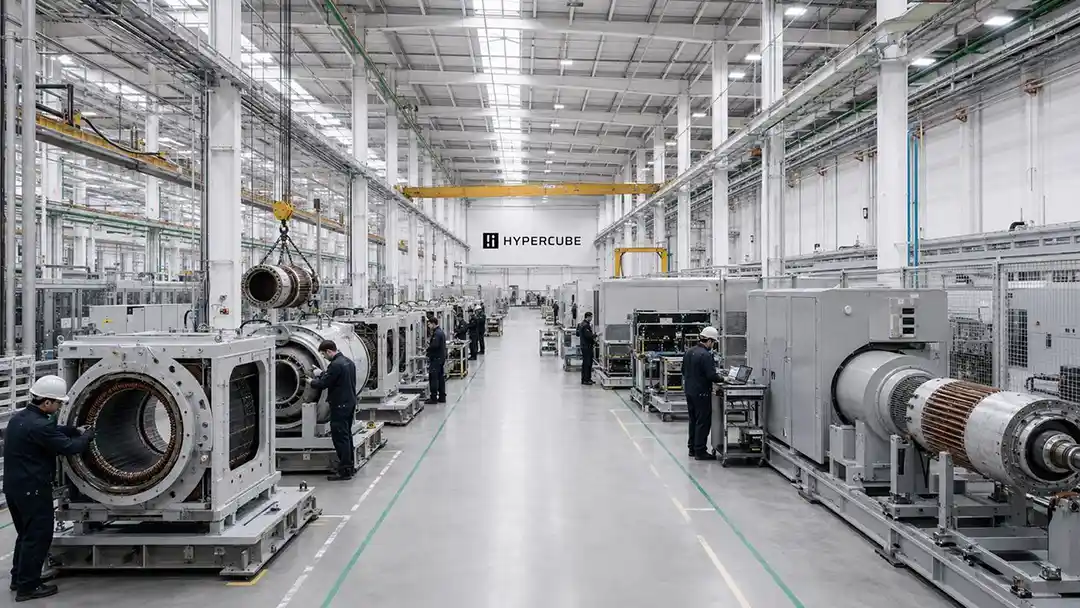
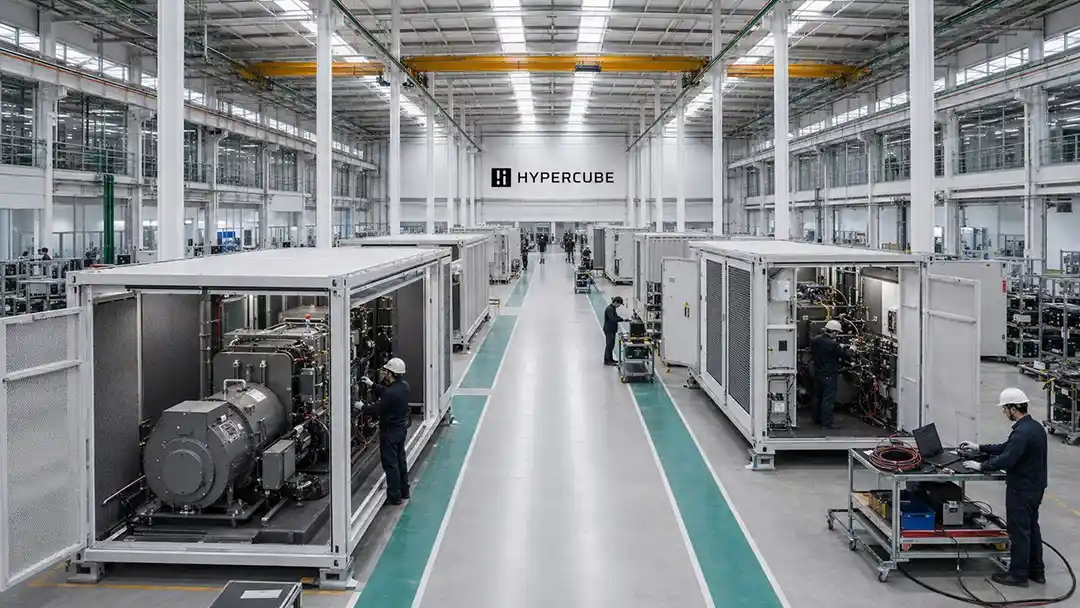
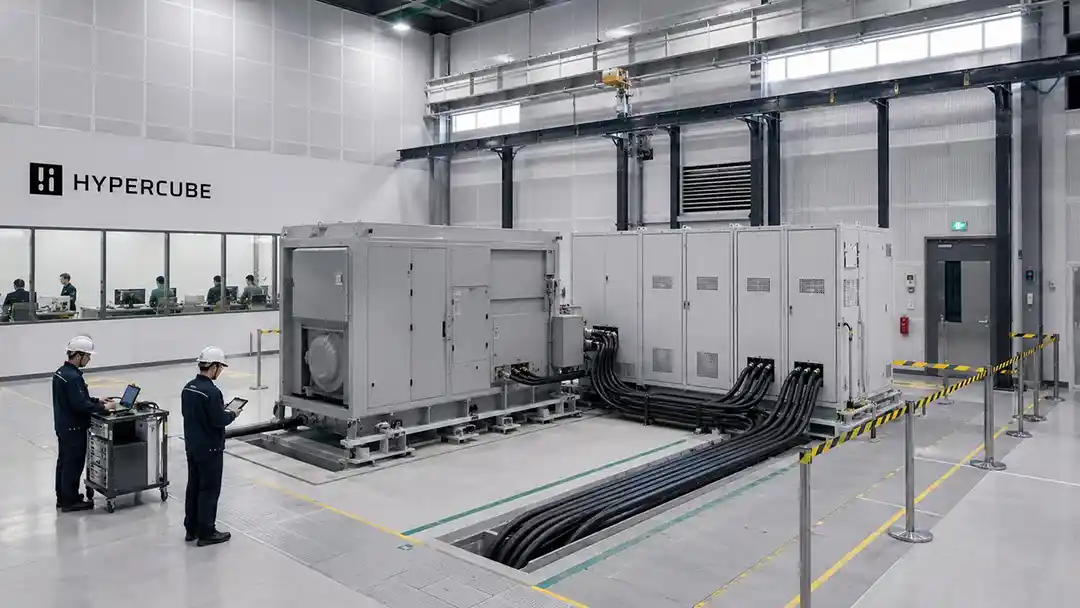
Everything DXQ builds is made in one planned campus in Dubai. Each hall builds one family.

01

HYPERCUBE

Sovereign compute estate

02

HYPERQ

Personal to transportable

03

CONTAINERS

Enclosure fabrication and integration

04

GPU SYSTEMS

Server integration and acceptance

05

BATTERY

Cells to containers

06

POWER UNIT

Generation, conversion, distribution

07

DRONES

Unarmed autonomous aircraft

08

MOBILITY

Sovereign autonomous vehicles